All guides & resources →
Explore Chicago

Chicago's hidden gems: landmarks not everyone knows about

The famous stuff is on every list. These are the places locals point out from the car: the leaning tower in a suburb, the golden lady in a traffic circle, the tomb that was too heavy to move, the spot where the atomic age started, the bison at the physics lab. All of it is real, most of it is free, and it is scattered across the whole region on purpose.

What's left of the World's Fairs·Hidden in plain sight, in the city·North and northwest·West and southwestAll resources →

Before you go

Everything here is open to the public in some form, but hours are seasonal, some interiors are by tour only, and a few sites are mid-restoration in 2026 (the Golden Lady in Jackson Park is under scaffolding, the Darrow Bridge behind the MSI is closed, and Jackson Park traffic changed when the Obama Presidential Center opened). We link each place's official page; check it before you drive out. If you are new to the region, start with Chicagoland for newcomers, then use this page to fill your weekends.

What's left of the World's Fairs

The 1893 World's Columbian Exposition built a white city in Jackson Park and tore most of it down within a few years. Here is what survived, plus the 1933 fair's leftovers.

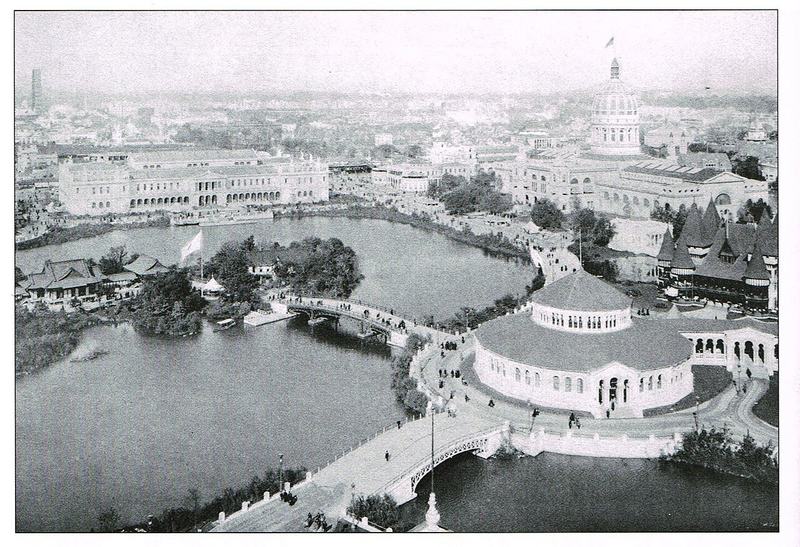
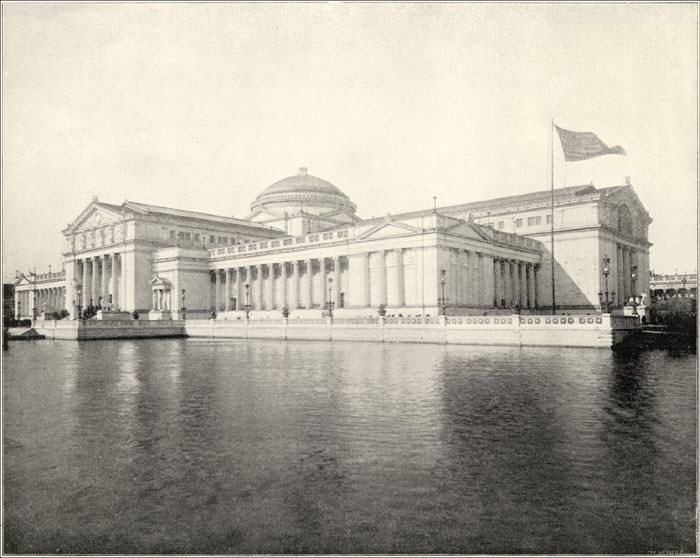
Historic photograph, The Palace of Fine Arts, now the Griffin MSI1893
Photo: The Field Museum Library, Public domain
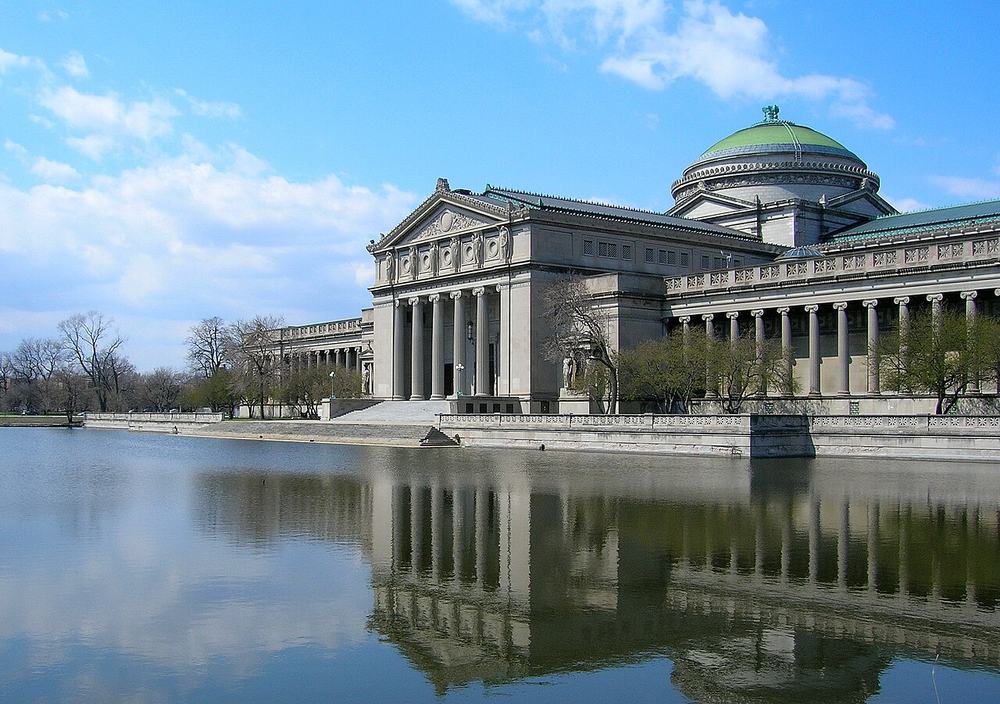
The Museum of Science and Industry, the last major building of the 1893 fairTODAY
Photo: zooey, CC BY 2.0
1893 building·Jackson Park, 5700 S. DuSable Lake Shore Dr.

The Palace of Fine Arts, now the Griffin MSI

The one big fair building still standing where it stood. Charles Atwood's Palace of Fine Arts was built more solidly than the rest of the White City, brick under the plaster, because it held priceless borrowed art. After the fair it housed the Field Museum until 1920, then sat rotting until Sears president Julius Rosenwald paid to recast the exterior in limestone so it would keep its 1893 face. It reopened in 1933, during the second world's fair, as the Museum of Science and Industry. Walk around back to the Columbia Basin for the view the fairgoers had from the lagoon.

Go: Museum admission to go in; the exterior and the basin behind it are free any time. More on the museum on our museums page.
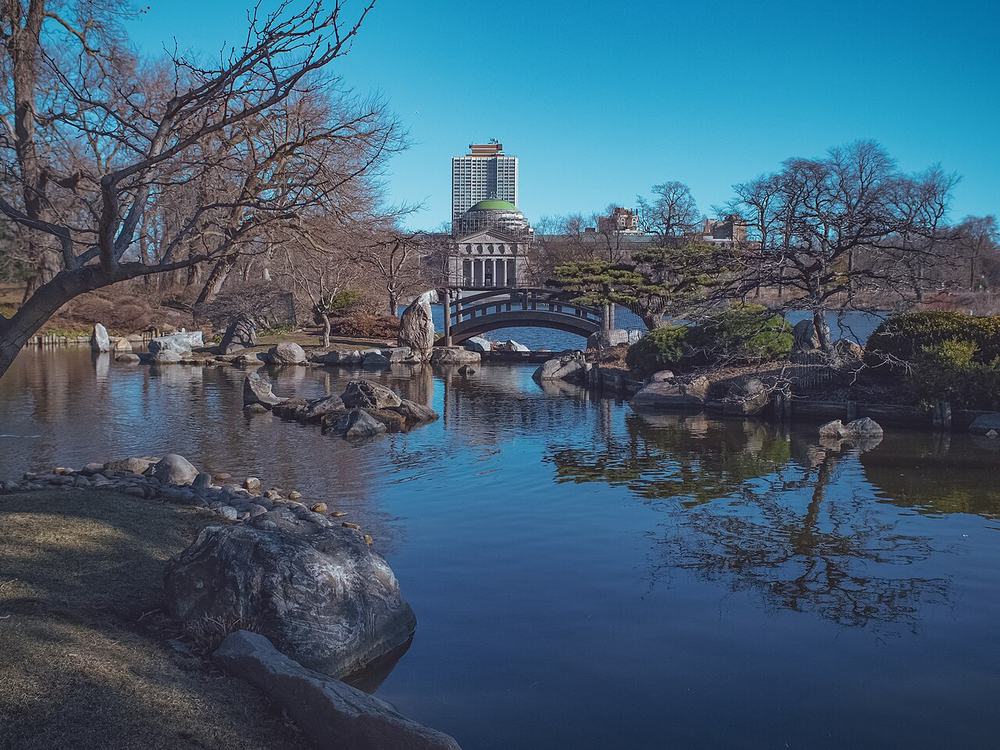
Historic photograph, Garden of the Phoenix and Sky Landing1893
Photo: Unknown photographer, Public domain
1893 pavilion; garden 1935, rebuilt 1981·Wooded Island, Jackson Park

Garden of the Phoenix and Sky Landing

Japan's gift to the 1893 fair was the Ho-o-den, the Phoenix Pavilion, modeled on an 11th-century temple hall in Uji and credited with turning a young Frank Lloyd Wright's head. A stroll garden with a moon bridge and stone lanterns grew around it in the 1930s. Then came Pearl Harbor: the site was closed, its Japanese caretaker was interned, and arsonists burned the pavilion in 1946. The garden was rebuilt as a peace symbol in 1981 and is now called the Garden of the Phoenix. On the exact footprint of the lost pavilion stand Yoko Ono's twelve steel lotus petals, Sky Landing (2016), her first permanent public artwork in the Americas. Come in late April when the 170-plus cherry trees planted around it since 2012 bloom for about a week.

Go: Free, park hours; enter Wooded Island from the north footbridge. The Clarence Darrow bridge on the museum side has been closed for years, so do not plan on it.
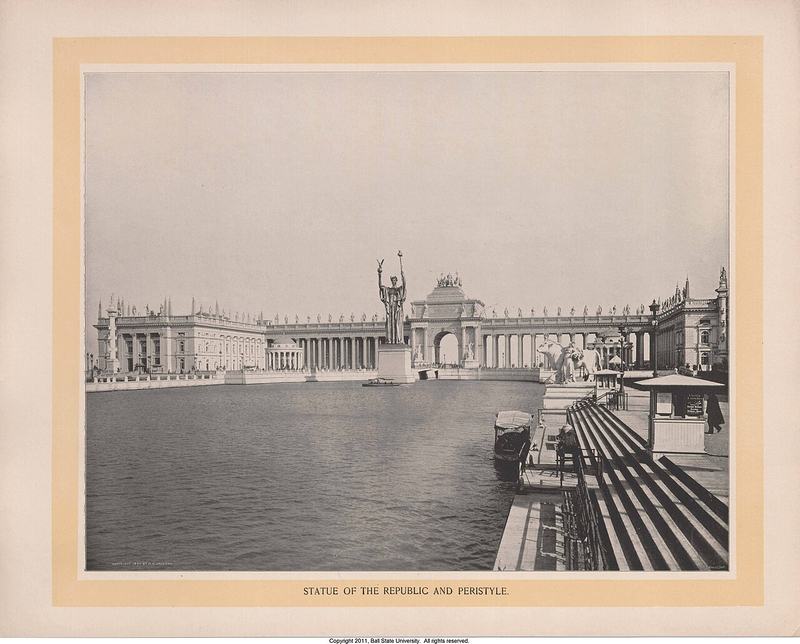
Historic photograph, The Statue of the Republic (the Golden Lady)1893
Photo: William Henry Jackson, Public domain
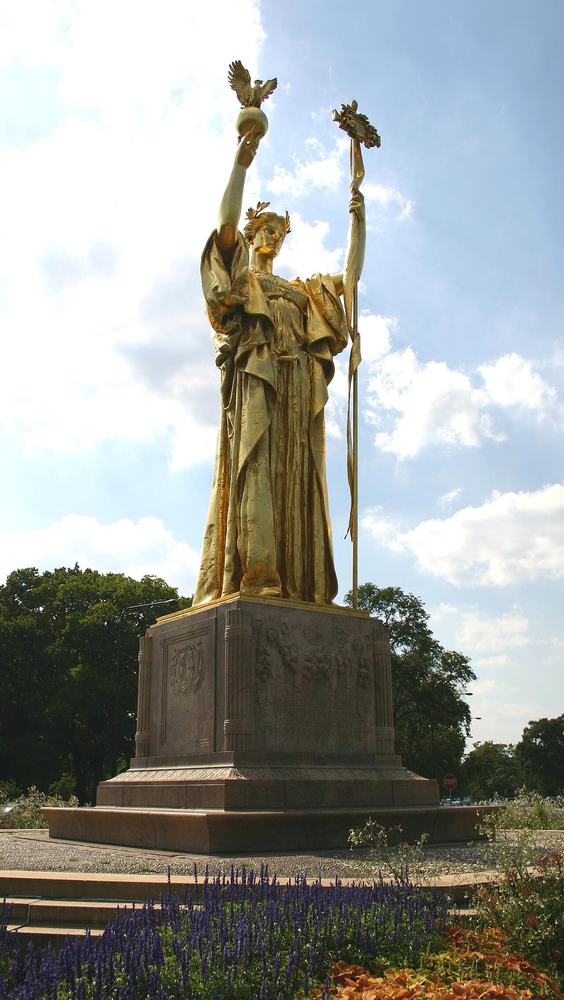
The gilded Statue of the Republic in Jackson ParkTODAY
Photo: J. Crocker, Public domain
1918, after the 1893 original·Hayes and Richards Drives, Jackson Park

The Statue of the Republic (the Golden Lady)

Drivers on Hayes Drive pass a 24-foot gold woman on a pedestal in a traffic circle and rarely know why. She is Daniel Chester French's smaller replica of the 65-foot Republic that towered over the fair's Grand Basin, second in height only to the Statue of Liberty among American statues until it burned in 1896. French, who later carved the seated Lincoln in Washington, made this one for the fair's 25th anniversary in 1918; the base is by Henry Bacon, architect of the Lincoln Memorial. She stands where the fair's domed Administration Building was, not where the original stood. She was regilded in 1993 and again starting in 2026, so if you find her wrapped in scaffolding, that is why.

Go: Free, outdoors, any time; expect scaffolding and a shroud through much of 2026 while the gold leaf is redone.
Historic photograph, Wooded Island1893
Photo: Unknown photographer, Public domain
Olmsted plan 1871; fair 1893·Jackson Park lagoons, between the MSI and Hayes Dr.

Wooded Island

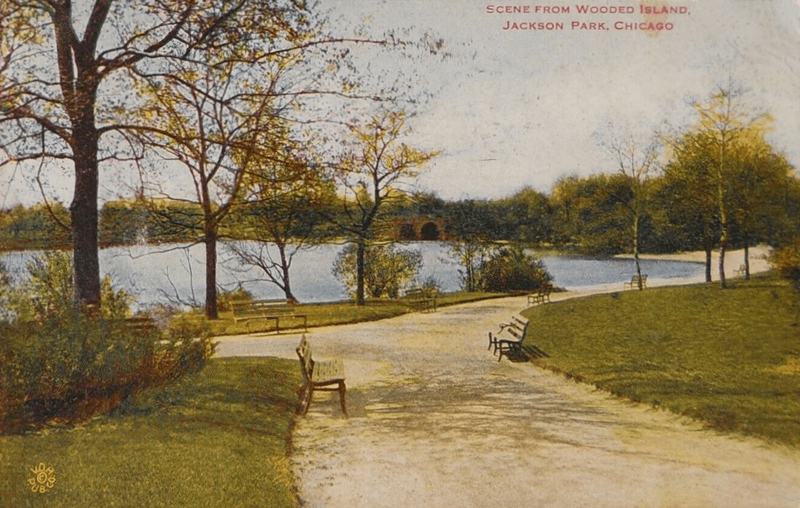
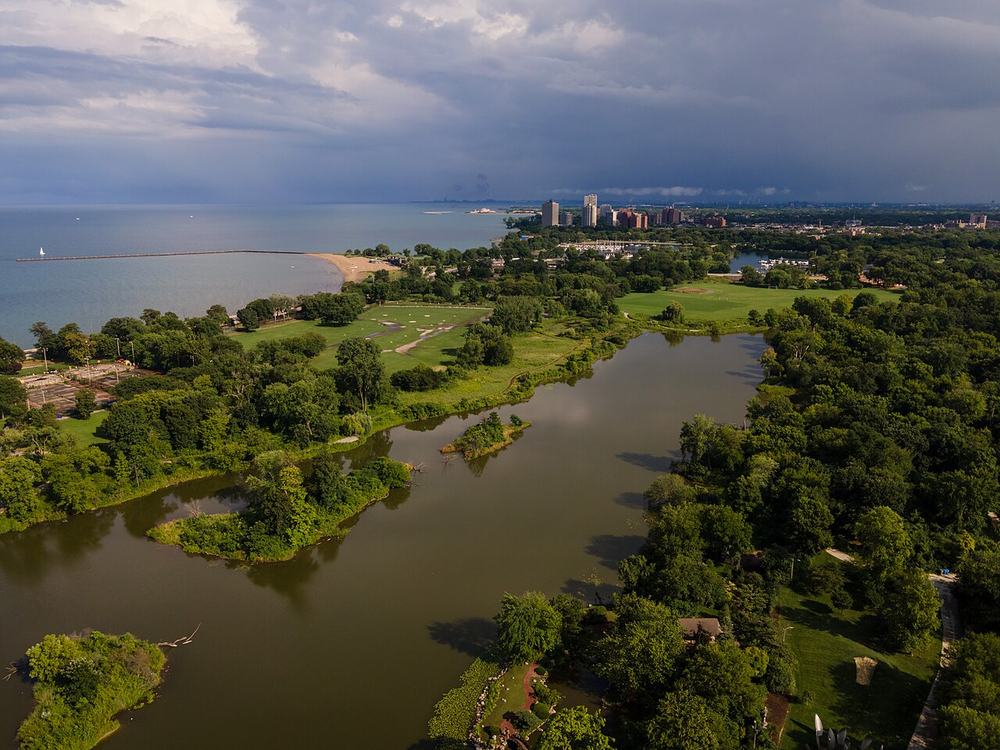
Frederick Law Olmsted designed the fairgrounds and insisted on one place with no buildings, a wooded island in the lagoon where fairgoers could escape the crowds. The Japanese pavilion was the only exception. Today it is the Paul H. Douglas Nature Sanctuary, named for the Hyde Park senator who saved the Indiana Dunes, and with the meadow next door it is one of the city's best spots for spring and fall bird migration, roughly 250 species recorded. The Garden of the Phoenix occupies its north tip. Walk the loop and it is hard to believe the busiest fair in American history was on every side of you.

Go: Free, park hours; footbridges at the north and south ends. Traffic patterns around here changed with the Obama Presidential Center, so give yourself time.
Historic photograph, The Midway Plaisance and the Fountain of Time1893
Photo: Unknown photographer, Public domain
Lorado Taft's Fountain of Time at the west end of the MidwayTODAY
Photo: Lorado Taft, Public domain
1893 fair; fountain 1922·59th to 60th St., Stony Island to Cottage Grove

The Midway Plaisance and the Fountain of Time

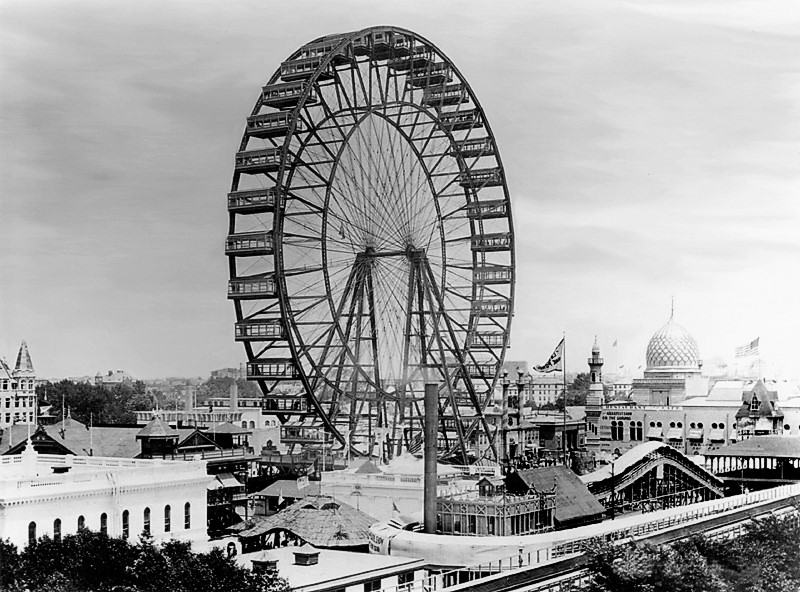
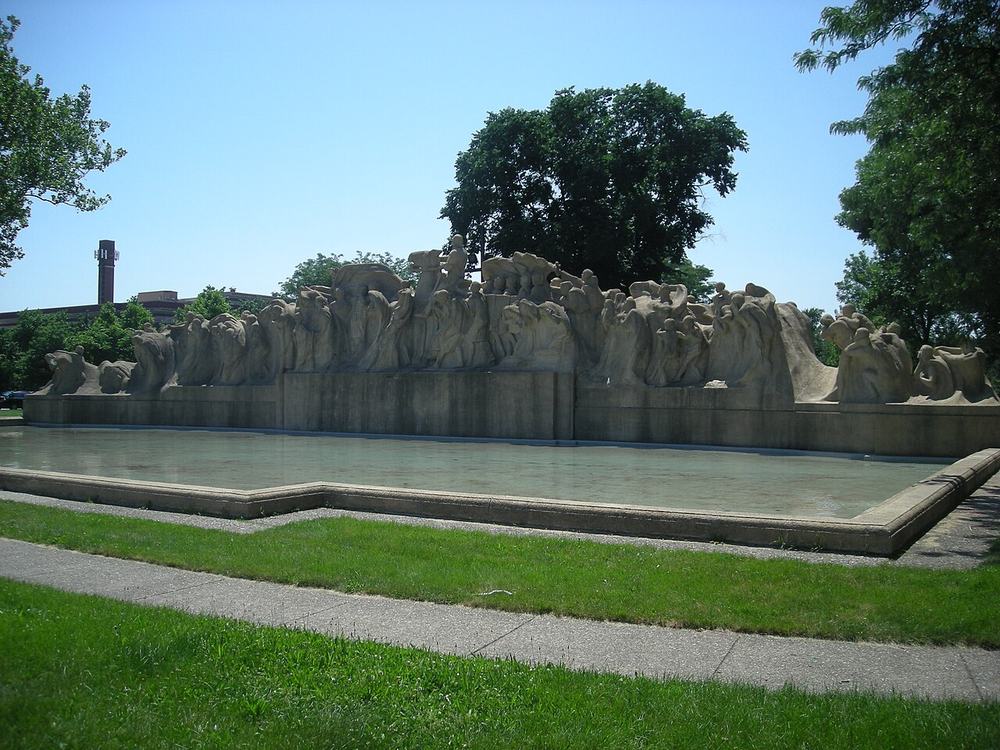
The mile-long lawn between the University of Chicago quads was the fair's amusement strip, and it gave the English language the word midway. The world's first Ferris wheel stood in the middle of it, 264 feet tall with 36 cars holding sixty riders each; the Park District puts the spot at today's ice rink, just west of Woodlawn Avenue. The sunken center was supposed to be a canal that never got dug. At the west end, at Cottage Grove, stands Lorado Taft's Fountain of Time (1922): more than a hundred figures streaming past a hooded Father Time, one of the first major sculptures cast in concrete, made to mark a century of peace between the United States and Britain. The Midway is now the front walk to the Obama Presidential Center.

Go: Free public park; ice rink in winter; the fountain is outdoors at the Cottage Grove end.
Historic photograph, The Art Institute's Michigan Avenue building1893
Photo: Unknown photographer, Public domain
The Art Institute of Chicago building on Michigan AvenueTODAY
Photo: GualdimG, CC BY-SA 4.0
1893·Loop, 111 S. Michigan Ave.

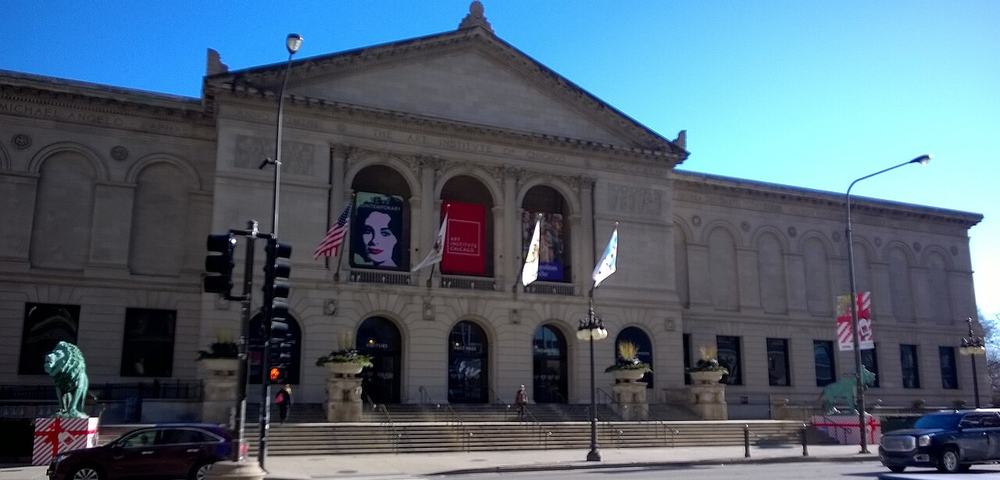
The Art Institute's Michigan Avenue building

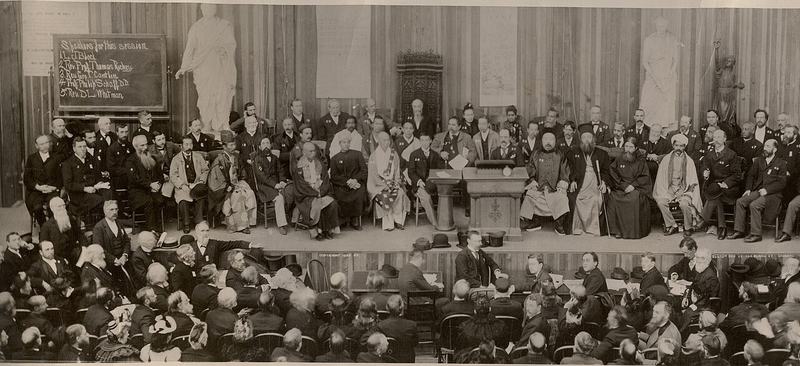
Not on the fairgrounds, but a fair building all the same. The city and the fair corporation split the cost of a downtown hall for the exposition's lecture congresses, and the Art Institute got the keys when the fair ended, opening here on December 8, 1893. That September the building hosted the World's Parliament of Religions, considered the birth of the interfaith movement, where Swami Vivekananda's opening words drew a two-minute standing ovation. Kemeys's lions arrived on the steps the following spring. Inside, another survivor: the reconstructed Trading Room of Adler and Sullivan's demolished Chicago Stock Exchange (see below).

Go: Museum admission for the inside; the facade and lions are free any time. Full entry on our museums page.
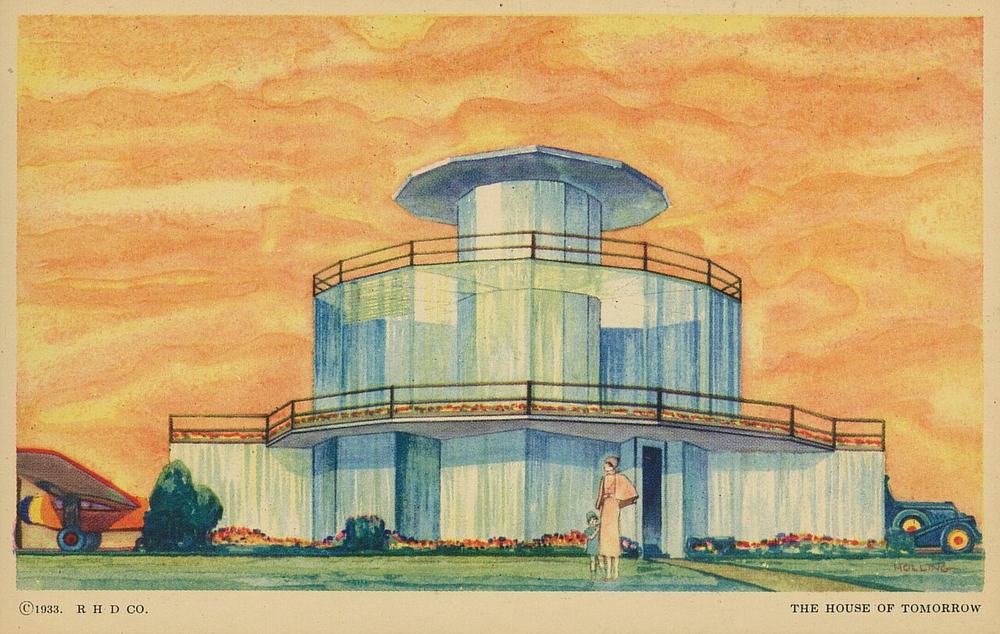
The House of Tomorrow, moved from the 1933 fair to Beverly Shores, Indiana
Photo: Steve Shook, CC BY 2.0
1933 to 1934·Beverly Shores, Indiana, about 50 miles from the Loop

The 1933 fair: five houses on the Indiana Dunes, and the Museum Campus

Chicago's second fair, the Century of Progress, ran along the lakefront on and around Northerly Island, and its Homes of Tomorrow exhibit showed off houses of the future. When it closed, a developer barged five of them across the lake to sell lots at his beach resort. They are still there on Lake Front Drive in Beverly Shores, inside Indiana Dunes National Park: the twelve-sided glass House of Tomorrow, the pink Florida Tropical House, a steel Armco-Ferro house, the Rostone house and a cypress log cabin. Four are leased to people who restored them; the House of Tomorrow has been getting a multimillion-dollar restoration. Closer to home, the fair is why the Museum Campus exists: the Adler (1930), the Shedd (1930) and the MSI (1933) all opened to catch its crowds.

Go: Exteriors are free to see from the road; interiors open one day a year on a tour that sells out within hours.

Hidden in plain sight, in the city

The things locals point out from the car and newcomers walk right past.

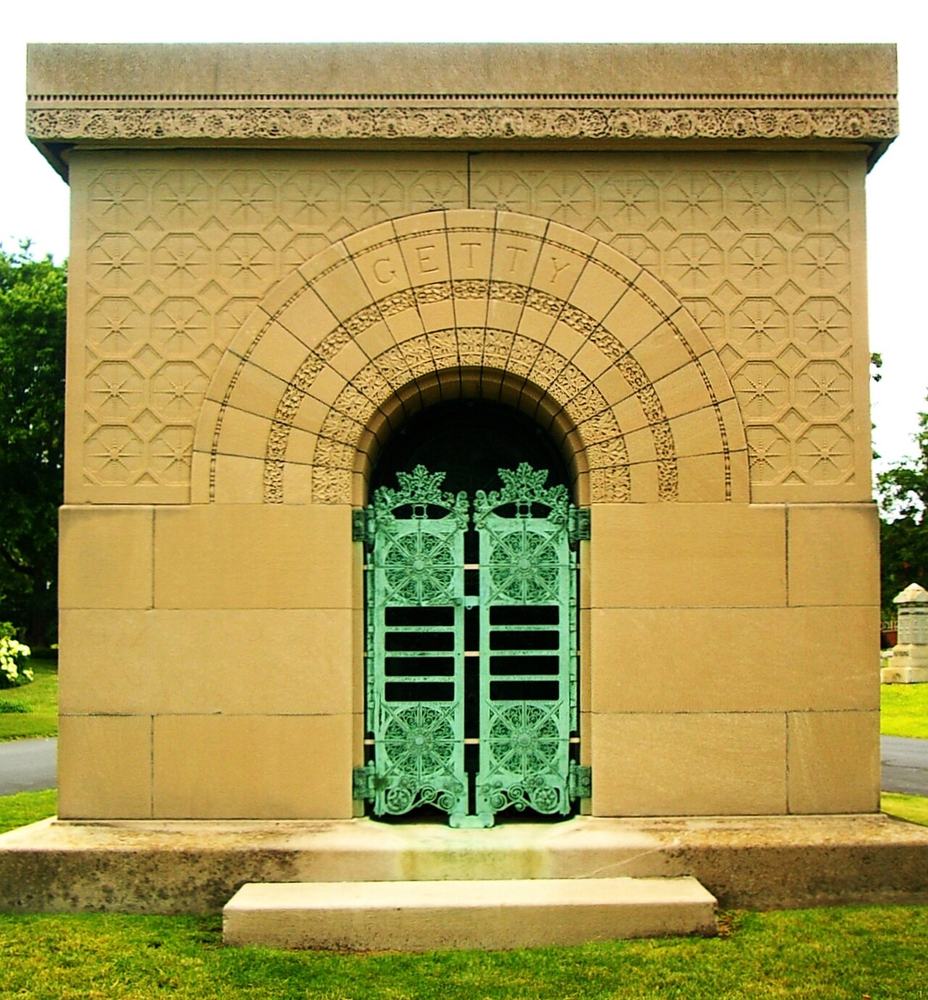
Louis Sullivan's Getty Tomb at Graceland Cemetery
Photo: David Gleason (mindfrieze), CC BY-SA 3.0
1860·Uptown, 4001 N. Clark St. at Irving Park Rd.

Graceland Cemetery

The architects who built the city are buried together here, on 121 acres of curving lanes and old trees: Daniel Burnham on his own island in the lake, Louis Sullivan, Mies van der Rohe, John Root and William Le Baron Jenney, along with Marshall Field, the Palmers, Cyrus McCormick and Ernie Banks. Sullivan's Getty Tomb (1890) is a Chicago Landmark and a lesson in ornament in one small building. Lorado Taft's Eternal Silence, a hooded bronze figure over the grave of Dexter Graves, comes with the legend that if you look into its eyes you will see your own death. Bring a map; the cemetery publishes self-guided audio and tree tours.

Go: Free, gates open daily; hours are shorter in winter; groups should register.
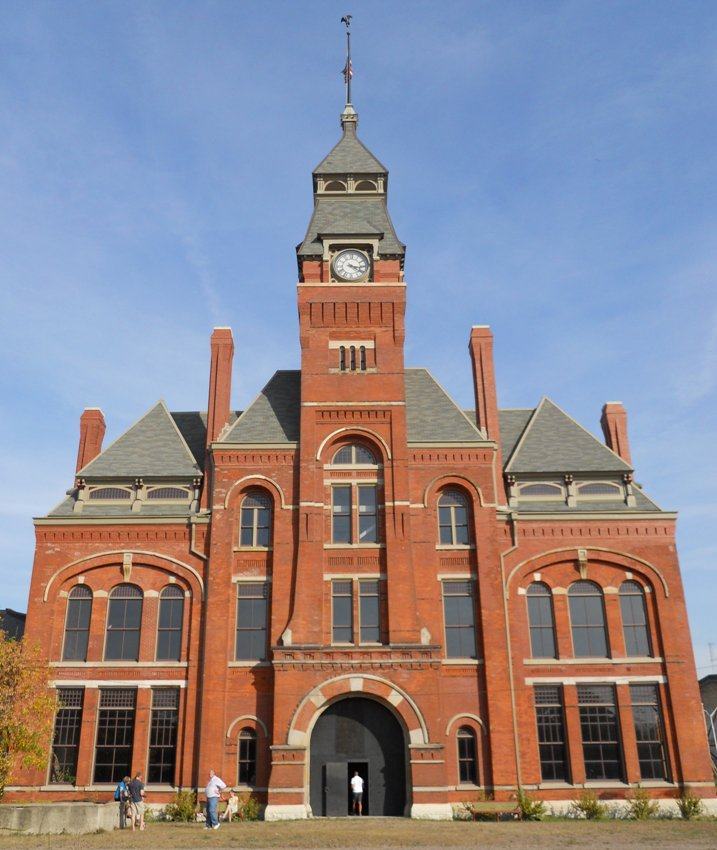
The restored Pullman clock tower and administration building
Photo: Boven, CC0
Town 1880 to 1884; national park unit 2015·Far South Side, 610 E. 111th St.

Pullman National Historical Park

George Pullman built an entire company town to make his railroad sleeping cars: brick rowhouses, a hotel, a church, a market and the factory with its clock tower, all designed by one architect. Then he cut wages without cutting rents, and the 1894 Pullman Strike brought federal troops and put Eugene Debs in jail. Thirty years later the Brotherhood of Sleeping Car Porters, the first major Black-led union, organized the men who worked those cars, and the Pullman Porter Museum in the neighborhood tells that story. It became Chicago's first National Park Service site in 2015. The clock tower building, gutted by arson in 1998, reopened as the visitor center in 2021, and the neighborhood around it is one of the most intact 19th-century streetscapes in the country.

Go: Free; visitor center hours on nps.gov; the Metra Electric stops two blocks away; the state-owned Hotel Florence offers free Thursday afternoon tours while it is restored.
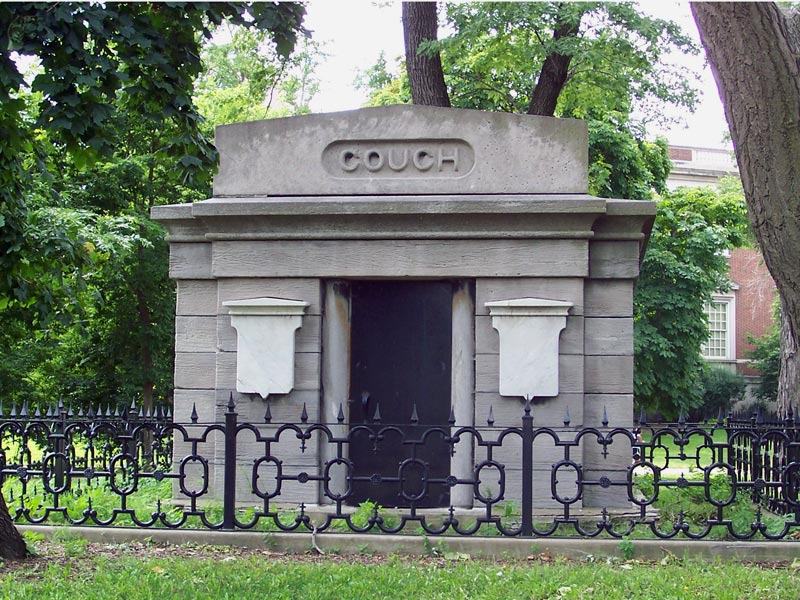
The stone Couch Mausoleum in Lincoln Park
Photo: Jmp2web, CC BY-SA 3.0
1858·Lincoln Park, behind the Chicago History Museum

The Couch Tomb

Lincoln Park used to be the city cemetery. When the land became a park in 1869 the graves were ordered moved, and this 50-ton stone vault, built in 1858 for hotel owner Ira Couch by John Van Osdel, the city's first architect, was the one thing judged too expensive to move. So it stayed, on purpose, as a reminder of what the park had been. Ira and several relatives are inside; nobody has ever confirmed how many, because the tomb is sealed. Once you know it is there, you cannot un-see it from the LaSalle Drive traffic.

Go: Free, outdoors, any time; you cannot go in.
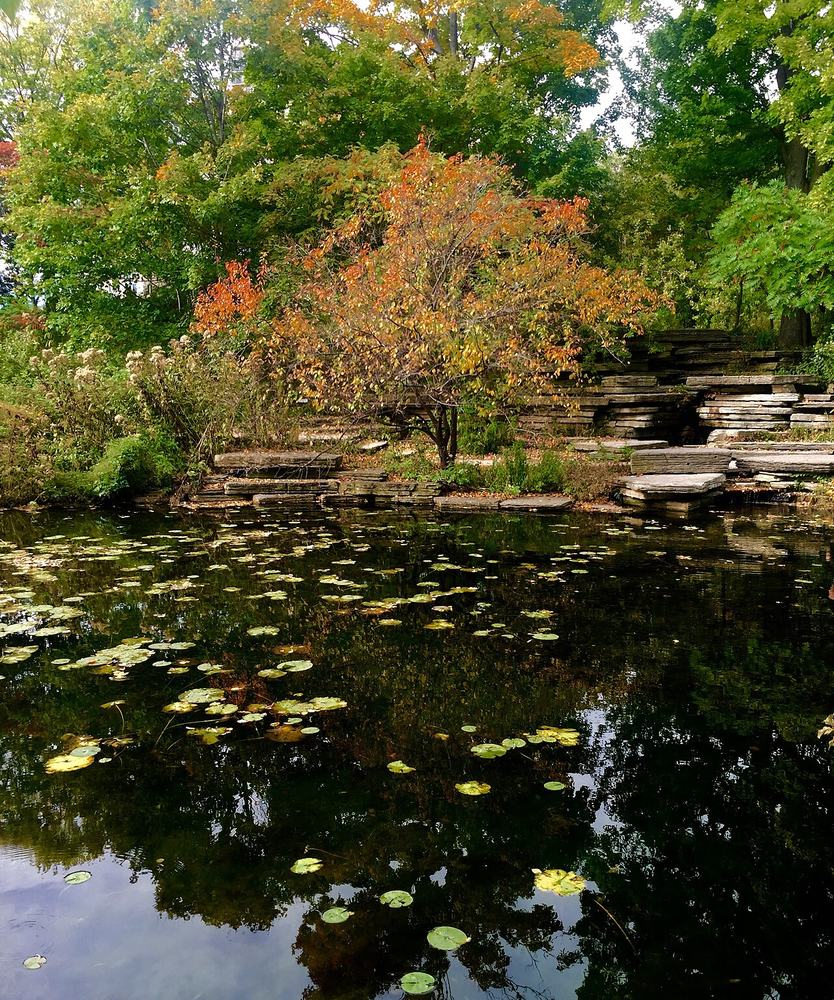
Stone ledges and still water at the Alfred Caldwell Lily Pool
Photo: Marilyn Engwall, CC BY-SA 4.0
1889; redesigned 1936 to 1938·Lincoln Park, Fullerton at Cannon Dr.

The Alfred Caldwell Lily Pool

A hidden garden behind a wall on Fullerton, steps from the zoo. Alfred Caldwell, a disciple of Jens Jensen, rebuilt a Victorian lily pond as a Prairie-style landscape in the 1930s: layered stone ledges meant to look like a river cutting through limestone, a low pavilion and a council ring for storytelling around a fire. The zoo borrowed it as a bird exhibit for forty years and it fell apart; a restoration finished in 2002 and in 2006 it became a National Historic Landmark, the only landmark garden in Lincoln Park. It is a migratory bird stop and the quietest place on the North Side. Pair it with Caldwell's other masterpiece, Promontory Point.

Go: Free; open roughly late April through mid-November, daily until dusk; closed in winter; docent tours through the Lincoln Park Conservancy.
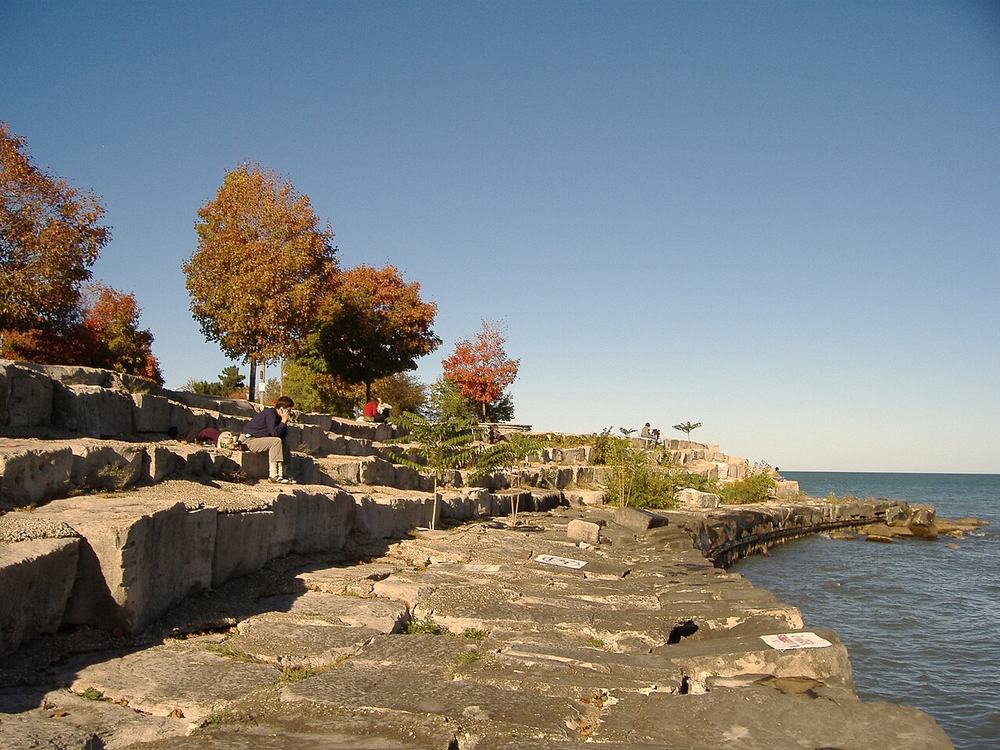
The limestone steps of Promontory Point with the skyline beyond
Photo: Kim Scarborough, CC BY-SA 2.0
1937·Hyde Park, the lakefront at 55th St.

Promontory Point

The Point is a twelve-acre man-made peninsula off 55th Street, the only one on the city's lakefront, with a raised meadow and stone council rings by Alfred Caldwell and a stone field house that hosts half the weddings in Hyde Park. Its stepped limestone shoreline is the last of its kind on the lake, and a decades-long neighborhood fight to keep it stone instead of concrete got it named a Chicago Landmark in 2023. It is where the neighborhood swims off the rocks (unofficially), watches sunrises and takes the picture of the skyline that makes people move to Hyde Park.

Go: Free, park hours; get there through the 55th Street pedestrian tunnel under the Drive; no lifeguards.
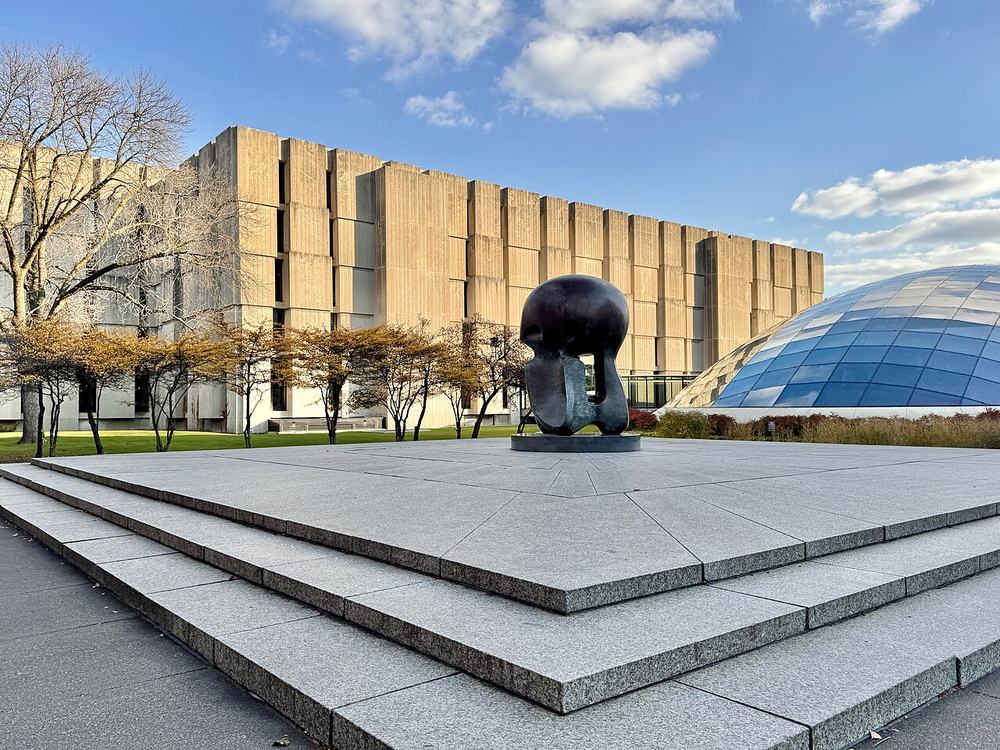
Henry Moore's bronze Nuclear Energy sculpture on the University of Chicago campus
Photo: Warren LeMay, CC BY-SA 2.0
Event 1942; sculpture 1967·University of Chicago, Ellis Ave. between 56th and 57th

Henry Moore's Nuclear Energy: where the atomic age began

On December 2, 1942, in a squash court under the west stands of the old Stagg Field, Enrico Fermi's team ran the first self-sustaining nuclear chain reaction. The stands are gone; on the spot stands Henry Moore's twelve-foot bronze, unveiled at 3:36 p.m. on December 2, 1967, twenty-five years to the minute later. Moore shaped it to read at once as a mushroom cloud and a skull above the arches of a cathedral. The site was among the earliest National Historic Landmarks. Next door is the glass-domed Mansueto Library, which is worth a look on its own.

Go: Free, outdoors, on a public campus street, any time.
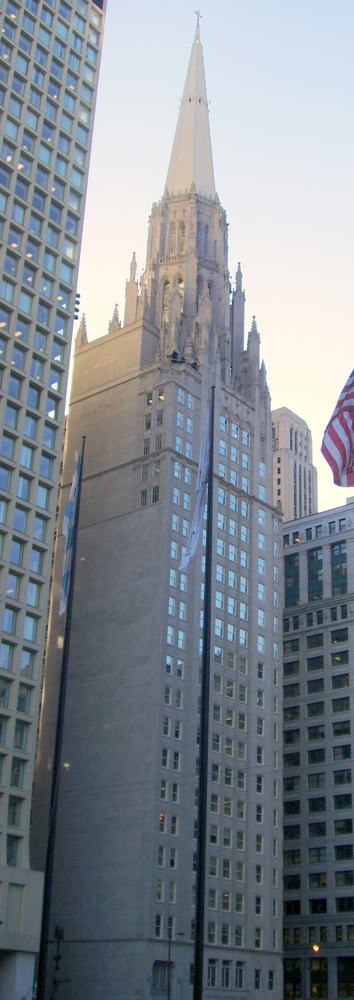
The Gothic spire of the Chicago Temple over Daley Plaza
Photo: DS1953, CC BY-SA 2.5
1924; chapel 1952·Loop, 77 W. Washington St. at Daley Plaza

The Chicago Temple and its Sky Chapel

Look up from the Picasso in Daley Plaza and there is a Gothic spire on top of an office tower. That is a church, and by one measure the tallest church building in the world at 568 feet. The congregation is Chicago's oldest Methodist one, on this corner since 1838; the floors in between are rented to law firms because the courts are next door, and Clarence Darrow once kept an office on six. Four hundred feet up in the spire is the Chapel in the Sky, a gift of the Walgreen family in 1952, seating about thirty under sixteen stained-glass windows, and you can go up on a tour.

Go: Sanctuary open weekday middays; Sky Chapel tours a few afternoons a week and after some services (stairs, not accessible); free with donations welcome.
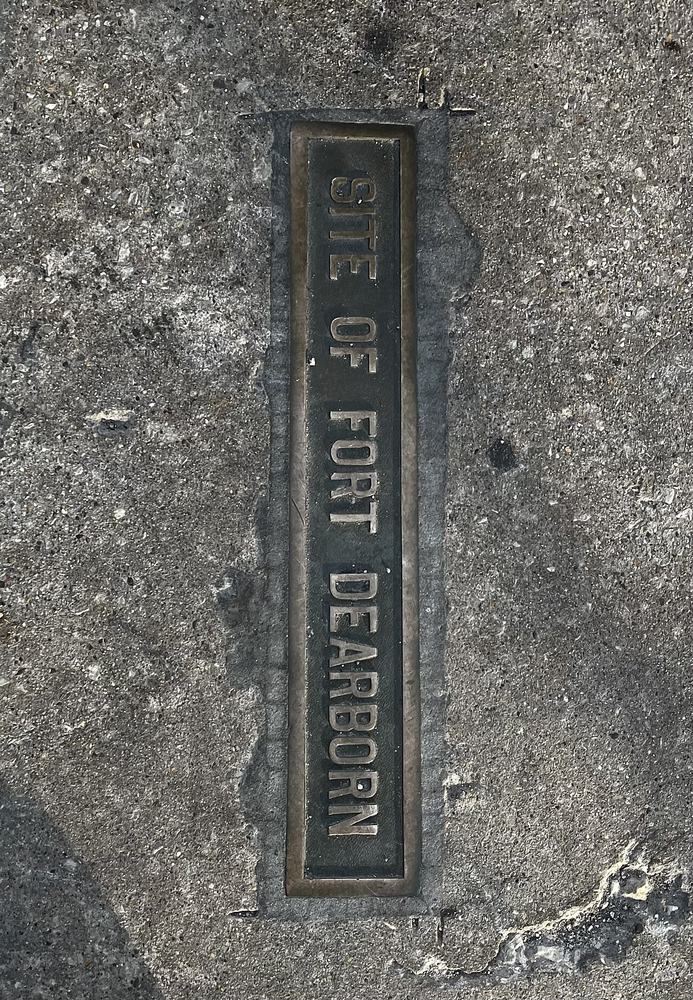
Bronze marker for Fort Dearborn set into the pavement at Michigan and Wacker
Photo: ANtietamcreek, CC BY 4.0
Fort 1803·Michigan Ave. at Wacker Dr.

The site of Fort Dearborn

The first star on the city flag. Fort Dearborn went up in 1803 on the south bank of the river where the Michigan Avenue bridge now lands, and it was destroyed in 1812 after most of the people who evacuated it were killed. Look down at the corner of Michigan and Wacker: bronze strips in the sidewalk and street trace the fort's outline, and a landmark plaque sits on the southwest bridgehouse. Look up at 360 North Michigan, the LondonHouse hotel, and there is a bronze relief of the fort over the door. Thousands of people cross this corner every hour without knowing the city started under their feet.

Go: Free, public sidewalk, any time; pair it with the Riverwalk and the bridgehouse museum in season.
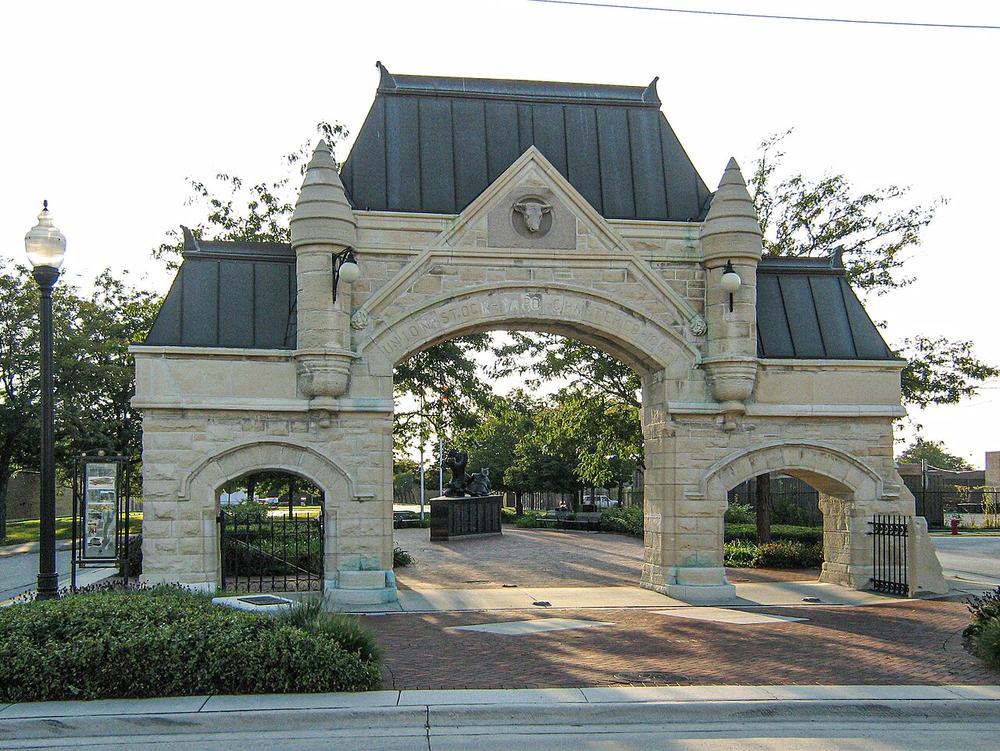
The limestone Union Stock Yard Gate
Photo: Zol87, CC BY-SA 2.0
About 1879·Back of the Yards, Exchange Ave. at Peoria St.

The Union Stock Yard Gate

For a century Chicago was hog butcher for the world, and this limestone arch, attributed to Burnham and Root, was the front door of the Union Stock Yards, which ran from 1865 to 1971 and inspired The Jungle. The carved bull's head over the arch is said to be Sherman, the prize bull of the yard superintendent. It is nearly the only thing that survived the fires and demolitions, and it is a National Historic Landmark. Beside it stands the memorial to the 21 firefighters killed in the 1910 stockyards fire, engraved with the name of every Chicago firefighter who has died on duty since.

Go: Free, public street, any time; it is an industrial area and quiet after hours.
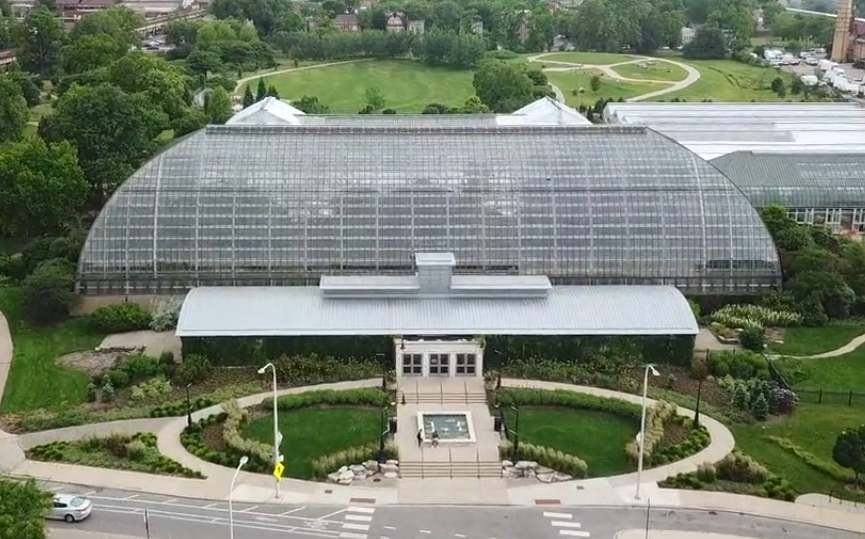
Aerial view of the glass houses of the Garfield Park Conservatory
Photo: Steven Vance, CC BY 3.0
1908·East Garfield Park, 300 N. Central Park Ave.

Garfield Park Conservatory

Jens Jensen called it landscape art under glass: about four and a half acres of it, opened in 1908 and still one of the biggest conservatories in the country. Jensen shaped the roof like a Midwestern haystack and planted the specimens in the ground rather than in pots, and his Fern Room, with its lagoon and layered stone, is his idea of what Chicago looked like before Chicago. A 2011 hailstorm shattered much of the glass; it came back. The Green Line stops literally at the door. It is the West Side's great gift to the whole city and it is nearly empty on weekday mornings.

Go: Closed Mondays and Tuesdays; free for Chicago residents with ID, admission for everyone else; timed reservations recommended.
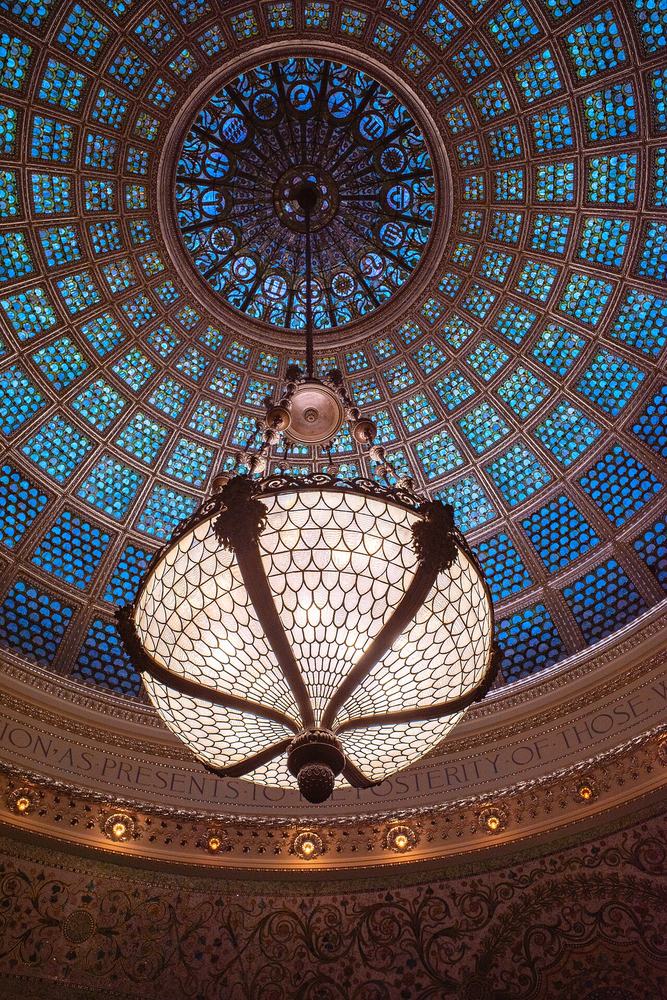
The Tiffany glass dome of Preston Bradley Hall in the Chicago Cultural Center
Photo: Grant Henninger, CC BY-SA 4.0
1897; dome restored 2008·Loop, 78 E. Washington St.

The Chicago Cultural Center's Tiffany dome

The city's first central library (1897) is now a free arts building, and on the third floor is the largest Tiffany glass dome in the world: 38 feet across, about 30,000 pieces of fish-scale glass in 243 sections, ringed by the signs of the zodiac. For seventy years it was hidden under a concrete and copper cap; a 2008 restoration replaced the cap with clear glazing and let daylight back through it. There is a second stained-glass dome at the other end of the building. Both are free, every day, and half the tourists on Michigan Avenue never go in.

Go: Free, open daily; free building tours on a posted schedule.
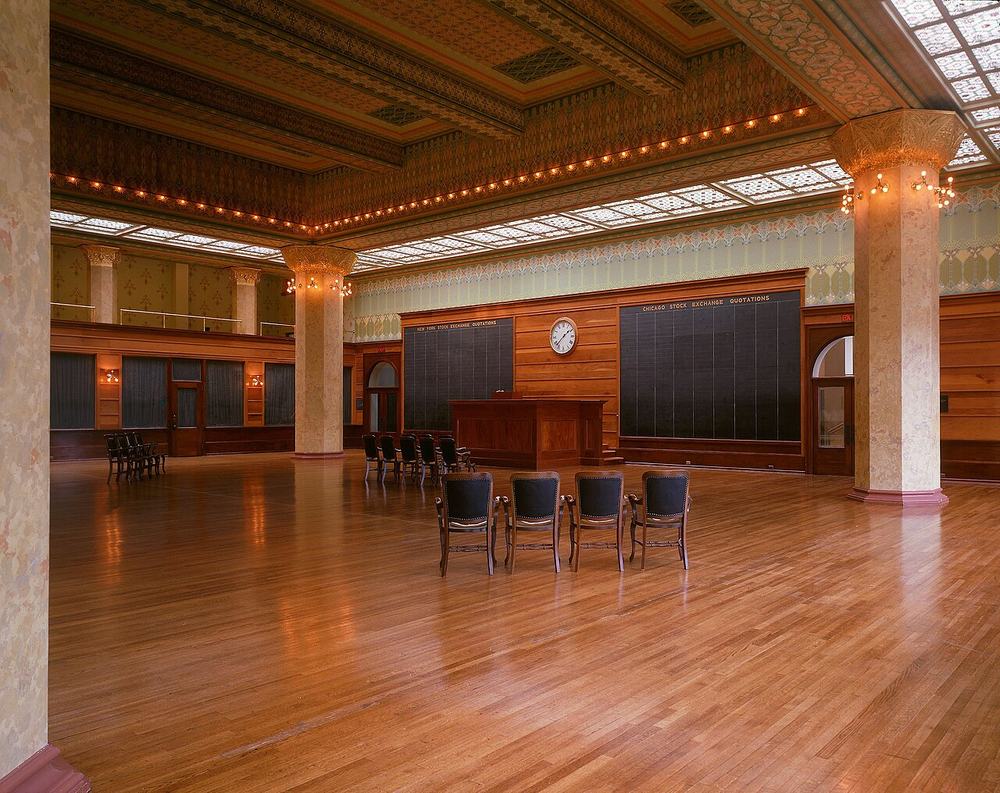
The reconstructed Chicago Stock Exchange Trading Room inside the Art Institute
Photo: Art Institute of Chicago, CC0
1894; reconstructed 1977·Art Institute, Columbus Dr. side

The Chicago Stock Exchange Trading Room and Arch

Adler and Sullivan's Stock Exchange on LaSalle Street was demolished in 1972 after a preservation fight that the city lost, and the photographer Richard Nickel was killed inside it while salvaging ornament. What was saved ended up here: the stenciled, gilded, art-glass Trading Room was rebuilt piece by piece inside the Art Institute and reopened in 1977, and the terra cotta entrance arch stands outdoors at Columbus and Monroe. It made Chicago take preservation seriously. In 2026 the room landed on Preservation Chicago's most-endangered list because a museum expansion may touch that wing, so see it while you can.

Go: Trading Room with museum admission (sometimes closed for events); the arch is outside and free any time.
The quarry pond and paths of Palmisano Park in Bridgeport
Photo: Warren LeMay, CC BY-SA 4.0
Quarry 1830s to 1970; park 2009·Bridgeport, 27th and Halsted

Palmisano Park, the old Stearns Quarry

Bridgeport's park is a hole in the ground with a story. It is a 400-million-year-old coral reef that was quarried for limestone from the 1830s until 1970, dug 380 feet down, then filled with construction rubble for twenty years. In 2009 it reopened as a park with a fishing pond 34 feet below street level inside the old pit, cascading wetlands that catch every drop of rain that falls on it, boardwalks made of reclaimed material and a 33-foot hill, Mount Bridgeport, with the best free skyline view on the South Side. Fossils from the quarry are in the Field Museum.

Go: Free, open daily; catch-and-release fishing; sledding in winter.
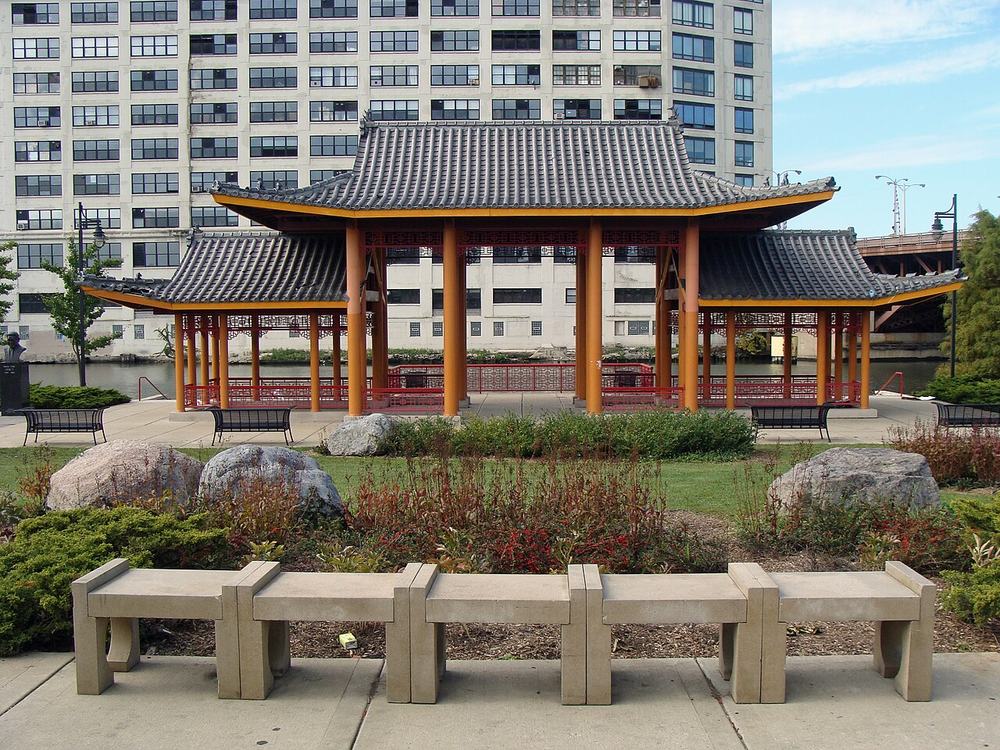
The pagoda pavilion in Ping Tom Memorial Park on the river
Photo: Torsodog, CC BY-SA 3.0
Park 1999; wall 2003·Chinatown, 1700 S. Wentworth Ave. and Cermak at Wentworth

Ping Tom Park and the Nine Dragon Wall

A rail yard turned into seventeen acres of riverfront park with a pagoda-style pavilion, bamboo groves and a summer kayak launch, named for the civic leader who spent his life pushing for it. Then walk to the Red Line station at Cermak and Wentworth: the Nine Dragon Wall is a replica of the one in Beijing's Beihai Park, put up by the neighborhood's chamber of commerce in 2003, nine being the imperial number. Between the two you have the best free afternoon in Chinatown, before or after dinner.

Go: Free; the park is open early to late and the wall is outdoors any time.

North and northwest

A leaning tower, a temple, a lighthouse you can climb and a town square you have seen in a movie.

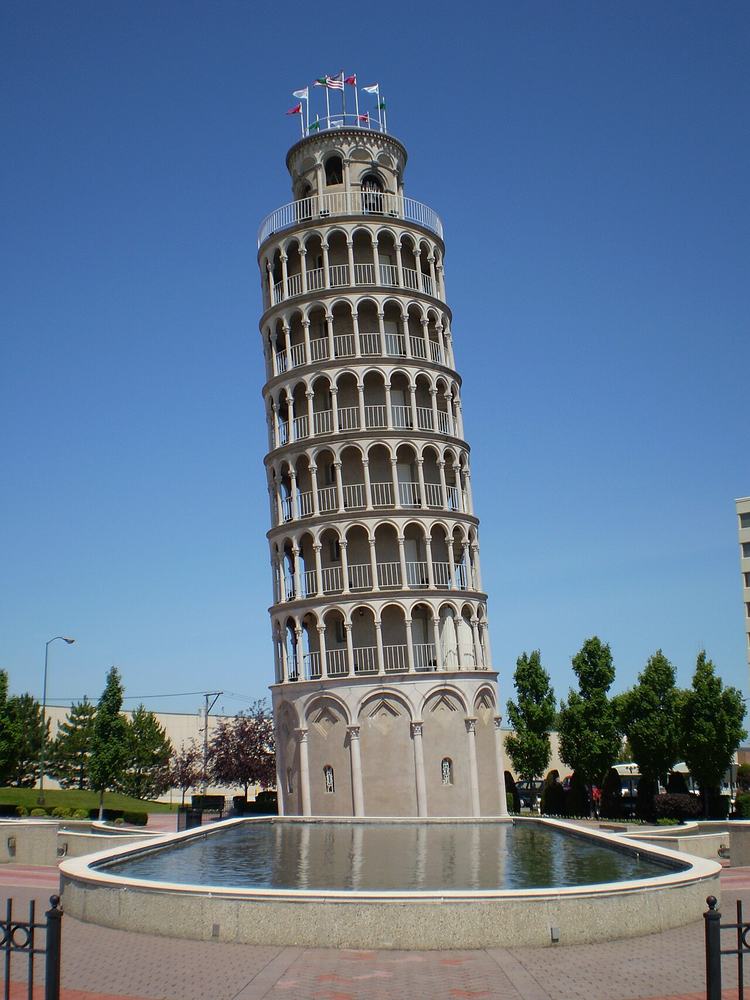
The half-scale Leaning Tower of Niles
Photo: Miroslaw Mucha, Public domain
1934·Niles, 6300 W. Touhy Ave.

The Leaning Tower of Niles

Yes, there is a leaning tower in Niles, and yes, it leans on purpose. Industrialist Robert Ilg built the half-scale, 94-foot copy of the Tower of Pisa in 1934 to hide the water tank that fed the swimming pools at his employees' park. It holds five bells, three of them cast in Italy between 1623 and 1747, and nobody knows how they got here. Niles and Pisa are sister cities. The village bought it from the YMCA for ten dollars in 2015, restored it, put it on the National Register in 2020, and rings the bells at 9, noon, 3 and 6. The old Y next door came down in 2025 to make room for a restaurant district around it.

Go: Free plaza, open year-round; no tower-top access yet; expect construction nearby.
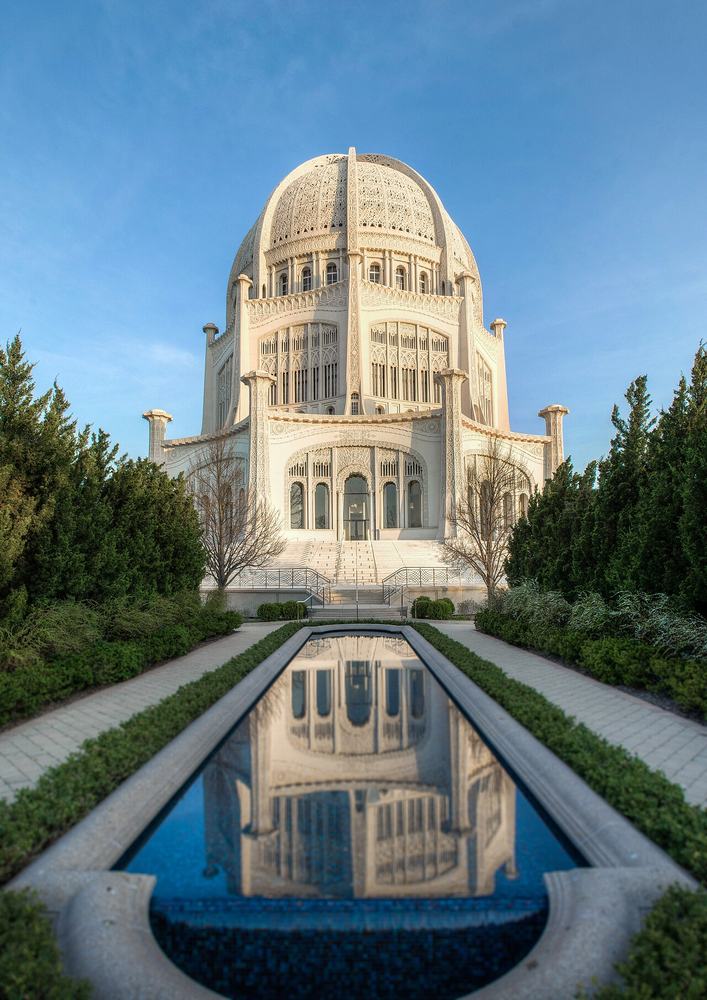
The white lace-like dome of the Baha'i House of Worship in Wilmette
Photo: Wenbinbin2010, CC BY-SA 4.0
Cornerstone 1912; dedicated 1953·Wilmette, 100 Linden Ave. at Sheridan Rd.

The Baha'i House of Worship

The white lace dome at the end of the Purple Line is the only Baha'i temple in North America and the oldest one still standing anywhere in the world. Forty years in the making, through a depression and a war, it was dedicated in 1953: nine sides, a 138-foot dome, and cladding of concrete mixed with white quartz that reads as filigree from the road. The gardens are by Hilbert Dahl. The auditorium is a silent space open to everyone of any faith, and short devotions are held twice a day. It was voted one of the seven wonders of Illinois, which sounds like a small list until you stand under it.

Go: Free; auditorium open daily from 6 a.m.; welcome center 10 to 6; a short walk from the Linden Purple Line stop.
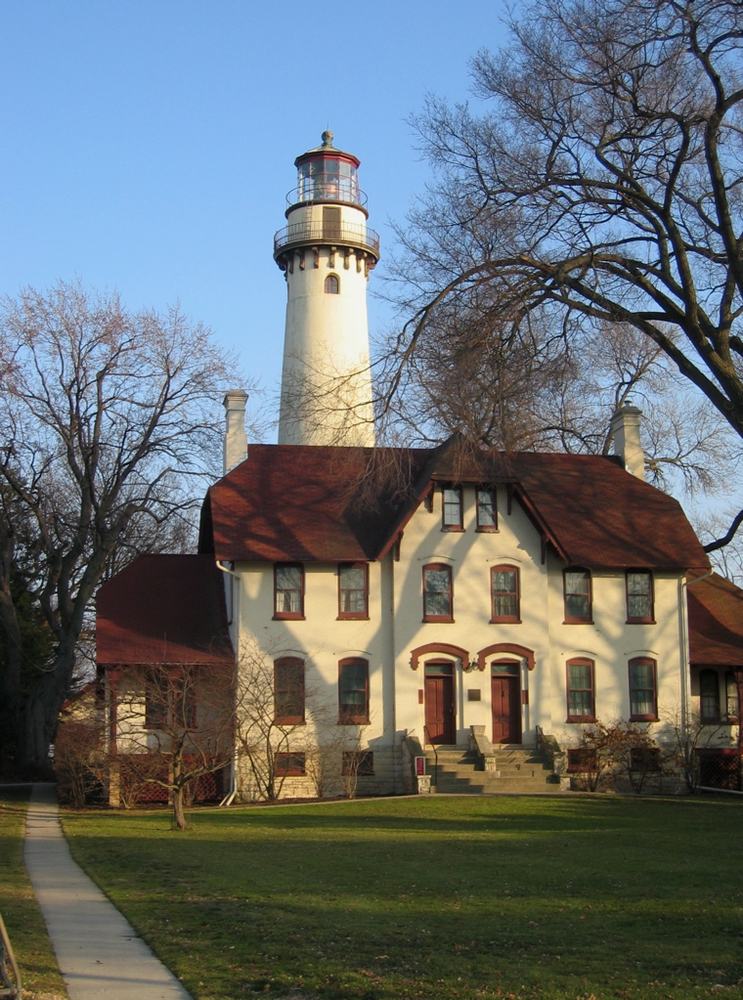
The Grosse Point Lighthouse in Evanston
Photo: JeremyA, CC BY-SA 2.5
1873·Evanston, 2601 Sheridan Rd. at Central St.

Grosse Point Lighthouse

Built after the 1860 wreck of the Lady Elgin off Evanston killed nearly 300 people, the 113-foot tower still holds its original French-made second-order Fresnel lens, the only one of its class on the Great Lakes still in place and working. It was decommissioned during the war and relit in 1946, and today the city owns it. Around it: a keeper's-quarters museum, a nature center in the old fog-signal buildings, wildflower gardens and a beach. It is one of the very few lighthouses in the area you can climb, and the view from the top explains the whole North Shore.

Go: Grounds free daily; tower and keeper's house tours on summer weekend afternoons only, small fee.
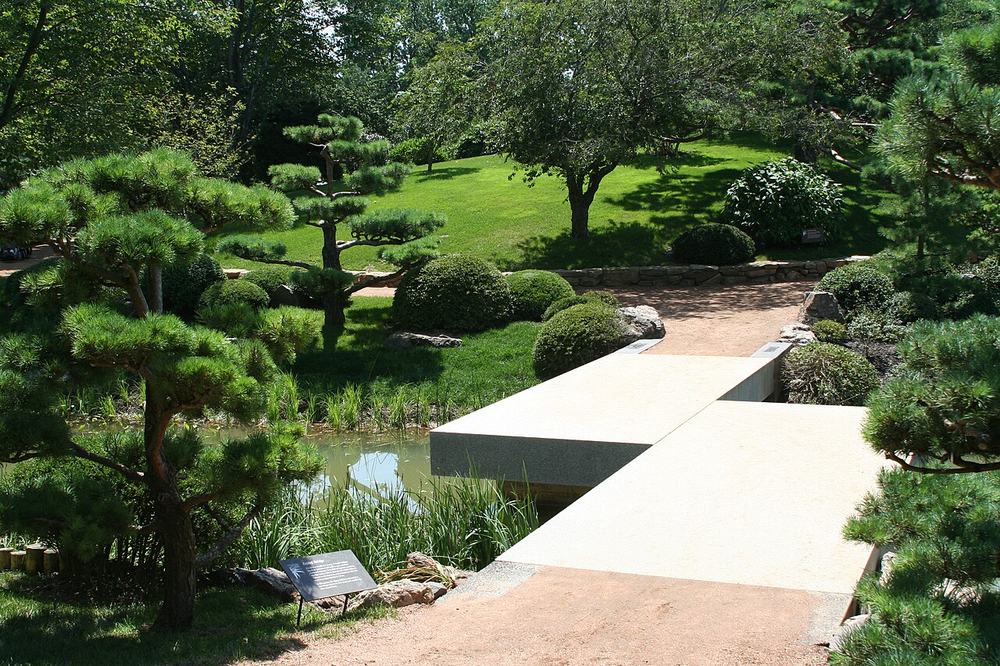
The zigzag bridge in the Japanese garden at the Chicago Botanic Garden
Photo: Kaosfere, CC BY-SA 2.5
1972; Japanese garden 1982·Glencoe, 1000 Lake Cook Rd.

Chicago Botanic Garden and its Japanese garden

Not exactly hidden, with a million visitors a year, but the best part of it is: Sansho-En, the Garden of Three Islands, designed by Koichi Kawana in 1982. Two islands you can walk, one by a zigzag bridge, and a third, the Island of Everlasting Happiness, that has no bridge or path at all and can only be looked at, which is the point. The shoin house was built in Japan, taken apart, shipped here and put back together by the same craftsmen. The bonsai collection rotates through a courtyard in season. The garden covers 385 acres on nine islands and it is run by the Chicago Horticultural Society on forest preserve land.

Go: Open daily; per-person admission plus parking; members free.
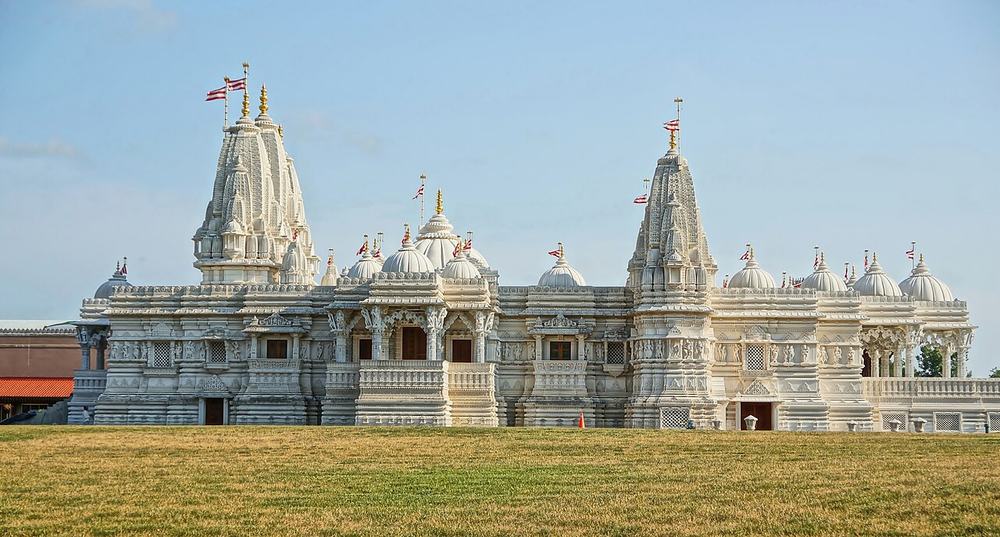
The carved stone BAPS Hindu temple in Bartlett
Photo: bogdanstepniak, CC BY 3.0
2004·Bartlett, 1851 S. Illinois Route 59

BAPS Shri Swaminarayan Mandir

A traditional Hindu temple carved by hand out of Turkish limestone and Italian marble by some 2,000 artisans in India, shipped here in about 40,000 pieces and fitted together in Bartlett in sixteen months. Sixteen domes, 151 pillars, 117 arches, and every surface carved. It is the largest of its kind in Illinois and one of the most beautiful buildings in the state, and it sits off Route 59 where nobody expects it. Visitors are welcome daily; shoes off, dress modestly (wraps are provided), no photos inside, and the daily lamp ceremony is at 11:15.

Go: Free; open to visitors daily; guided tours by advance booking.
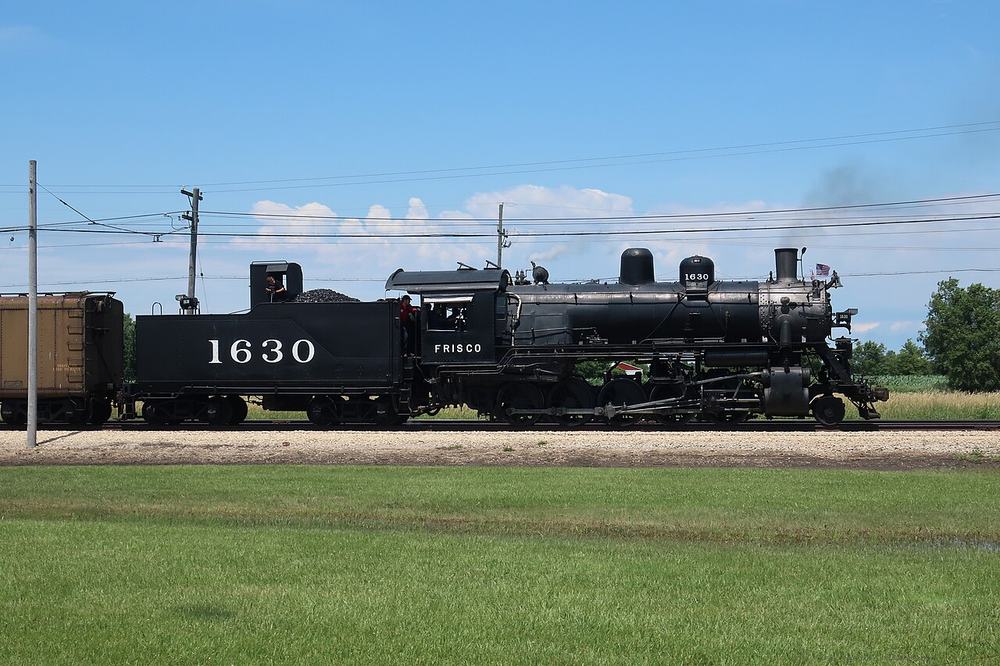
Steam locomotive 1630 running on the main line at the Illinois Railway Museum
Photo: H. Michael Miley, CC BY-SA 2.0
Founded 1953·Union, 7000 Olson Rd., about 55 miles northwest

Illinois Railway Museum

The largest railway museum in the country, on a hundred acres of McHenry County farmland, run mostly by volunteers. More than 500 pieces of equipment, and the difference from every other train museum is that things move: rides behind steam, diesels, interurbans, streetcars and vintage Chicago L cars on a five-mile main line and a trolley loop. The stars are the streamlined Nebraska Zephyr and the North Shore Line Electroliner that once ran from the Loop to Milwaukee. Go on a steam weekend and bring a kid, or be one.

Go: Paid admission; open weekends April through October and daily in summer; closed November through March.
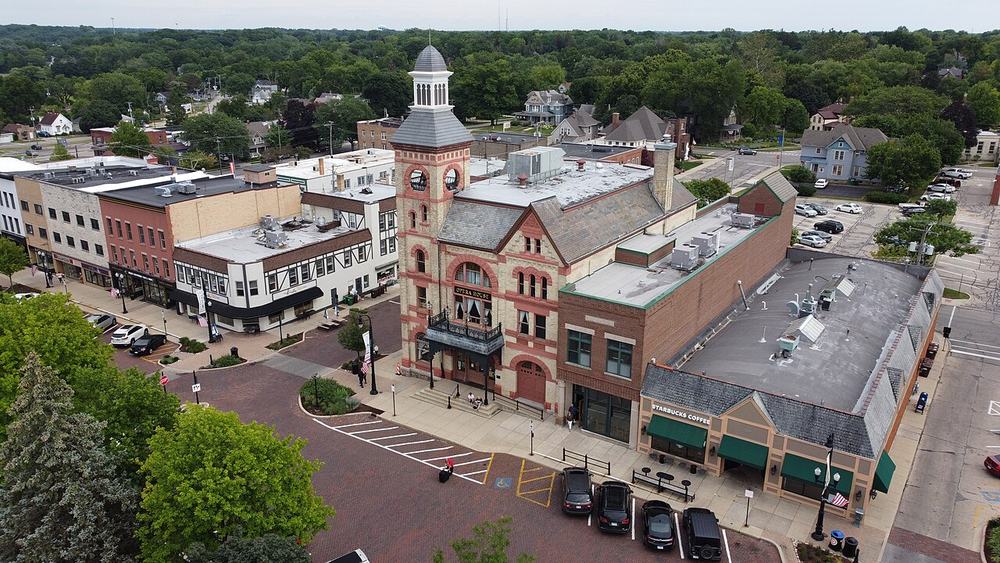
The Woodstock Opera House on Woodstock Square
Photo: Ginjirotchi, CC0
Square 1840s; Opera House 1889·Woodstock, about 50 miles northwest

Woodstock Square

You have seen this square. It played Punxsutawney in Groundhog Day, and the town leans into it every February with its own groundhog, Woodstock Willie, and plaques marking where Bill Murray stepped in the puddle. But it was a real Victorian square long before that, ringed by 19th-century storefronts and the 1889 Opera House, where a teenage Orson Welles staged his first professional festival in 1934 and where Paul Newman got early work. Eugene Debs served his Pullman Strike sentence in the jail here. Metra's Northwest line stops two blocks away, which makes it an easy day out.

Go: Free public square any time; the Opera House during shows and box-office hours; Groundhog Days around February 2.

West and southwest

The first planned suburb, two of the most important houses in America, a particle accelerator with its own bison herd, and the portage that made the city.

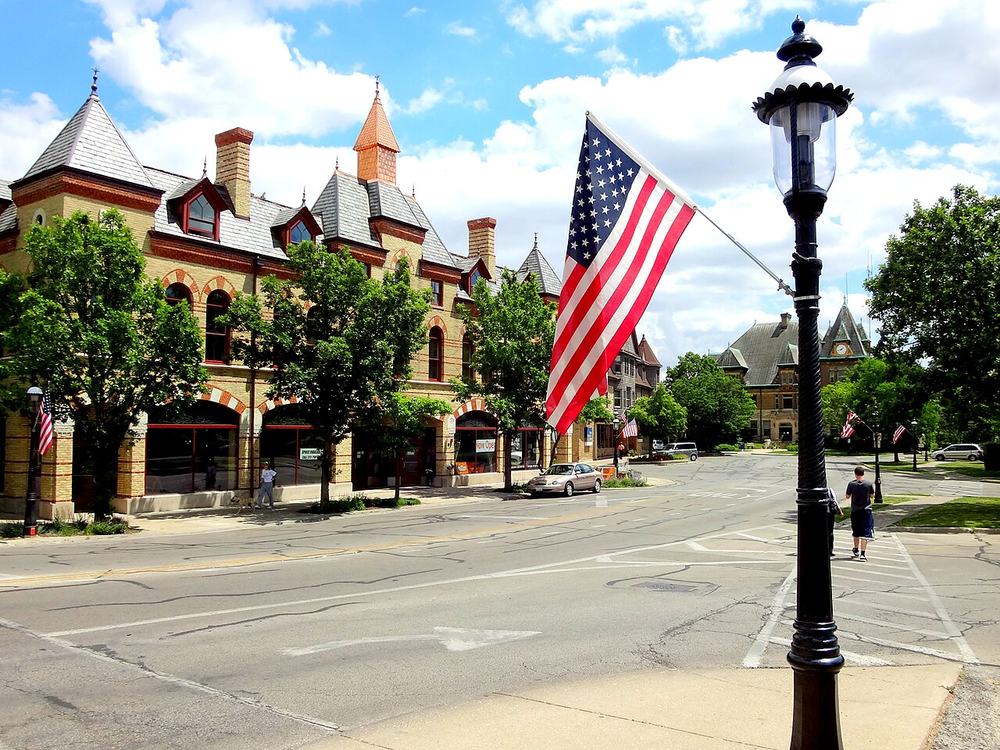
A curving tree-lined street in Riverside, Illinois
Photo: Nmaviano, CC BY-SA 3.0
1869·Riverside, about 11 miles west; Metra BNSF

Riverside, the first planned suburb

In 1869 Frederick Law Olmsted and Calvert Vaux, fresh off Central Park, laid out a whole village on the Des Plaines River with curving roads that follow the land, deep setbacks, dozens of little triangular parks and a center at the train station. It is arguably America's first planned suburb and nearly the whole village is a National Historic Landmark. Frank Lloyd Wright's Coonley and Tomek houses are here, and William Le Baron Jenney's storybook water tower is the town emblem. If you have ever wondered why every suburb since has curving streets, this is where it started, and it still works.

Go: Free to walk or drive; the Metra BNSF line stops in the middle of it; the small historical museum keeps limited hours.
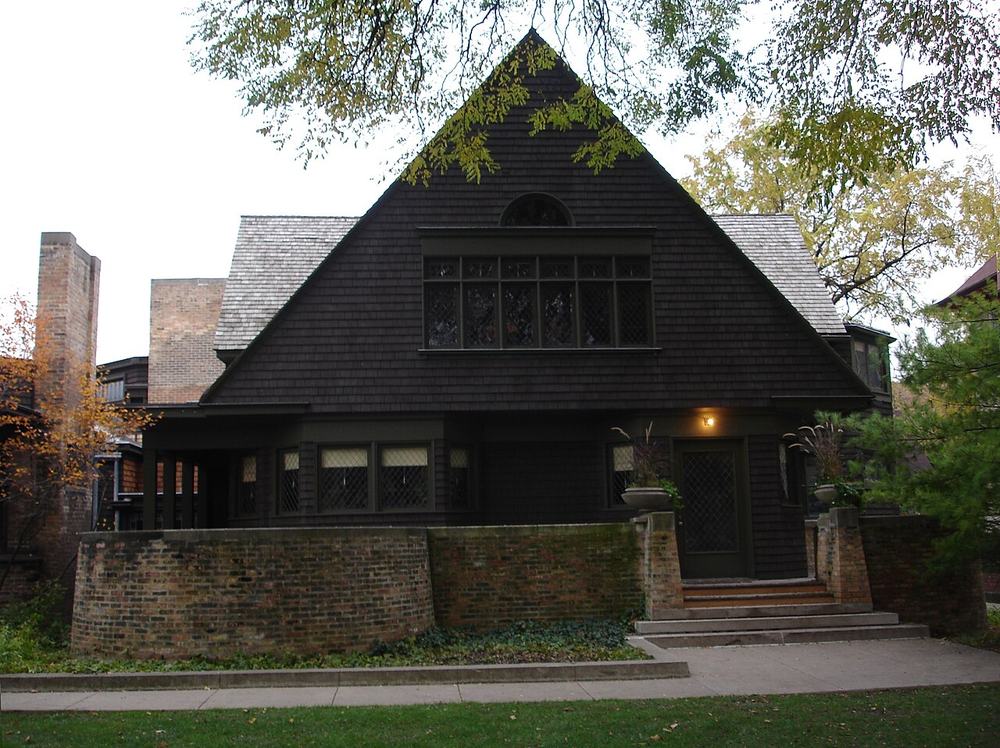
Frank Lloyd Wright's Home and Studio in Oak Park
Photo: John Delano, Attribution
1889 and 1905 to 1908·Oak Park, 951 Chicago Ave. and 875 Lake St.

Frank Lloyd Wright's Home & Studio and Unity Temple

Wright built his house at 22 with a loan from his boss Louis Sullivan and worked out the Prairie style in the studio he added in 1898, producing about 125 designs before he left in 1909. Oak Park has 25 of his buildings, more than anywhere on earth. A few blocks away, Unity Temple, poured in reinforced concrete for a congregation that still worships in it, is his only surviving public building from those years, restored in 2017 and named a UNESCO World Heritage Site in 2019 along with the Robie House in Hyde Park. Do the interiors by tour, then just walk Forest Avenue.

Go: Interiors by ticketed tour through the Frank Lloyd Wright Trust; the historic district is free to walk; the Green Line and Metra both get you there.
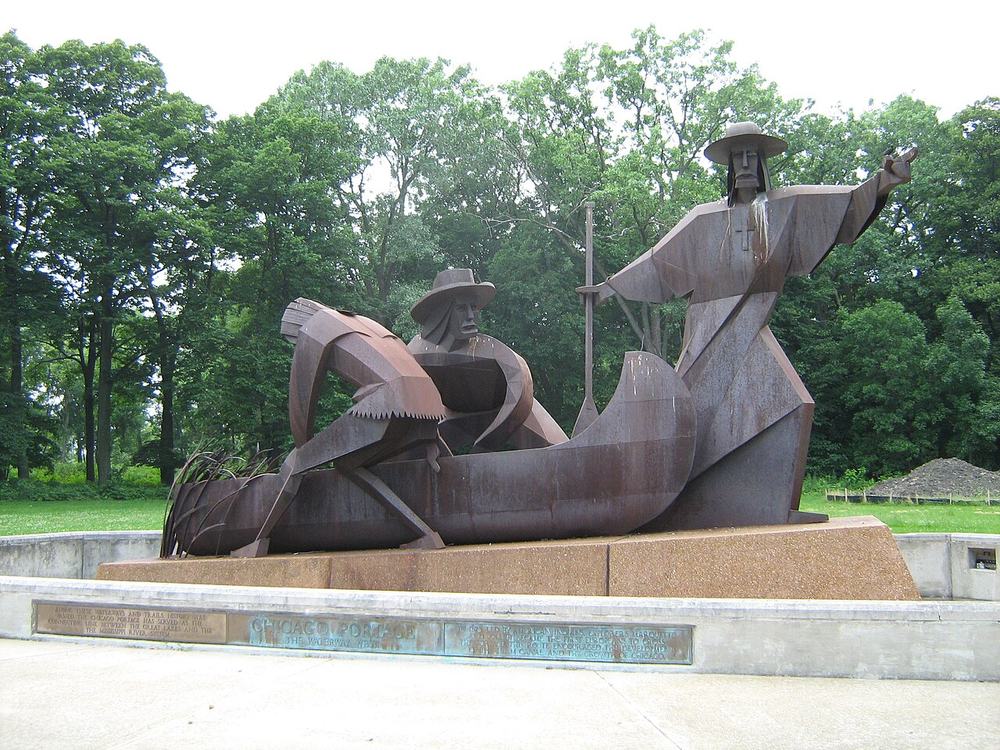
The Chicago Portage National Historic Site with its steel sculpture of Marquette and Jolliet
Photo: Zol87, CC BY-SA 4.0
1673 crossing; national historic site 1952·Lyons, 4800 S. Harlem Ave.

The Chicago Portage

The reason there is a Chicago. In 1673 Marquette and Jolliet, following routes the Native peoples had used for centuries, crossed the low continental divide here between the Des Plaines River and the Chicago River's south branch, the short muddy portage that connected the Great Lakes to the Mississippi. Everything since, the canal, the railroads, the city, follows from that geography. It is one of only two national historic sites in Illinois, run by the forest preserves, with a big rusted-steel sculpture of the explorers and their guide, a remnant creek, overlooks and trails, and almost nobody there.

Go: Free, sunrise to sunset; parking on Harlem; unstaffed; volunteers lead regular guided walks.
Wilson Hall, the tower at the center of Fermilab
Photo: CramBetter.com, CC BY 4.0
Lab 1967; Wilson Hall 1974·Batavia, entrance at Pine St. and Kirk Rd.

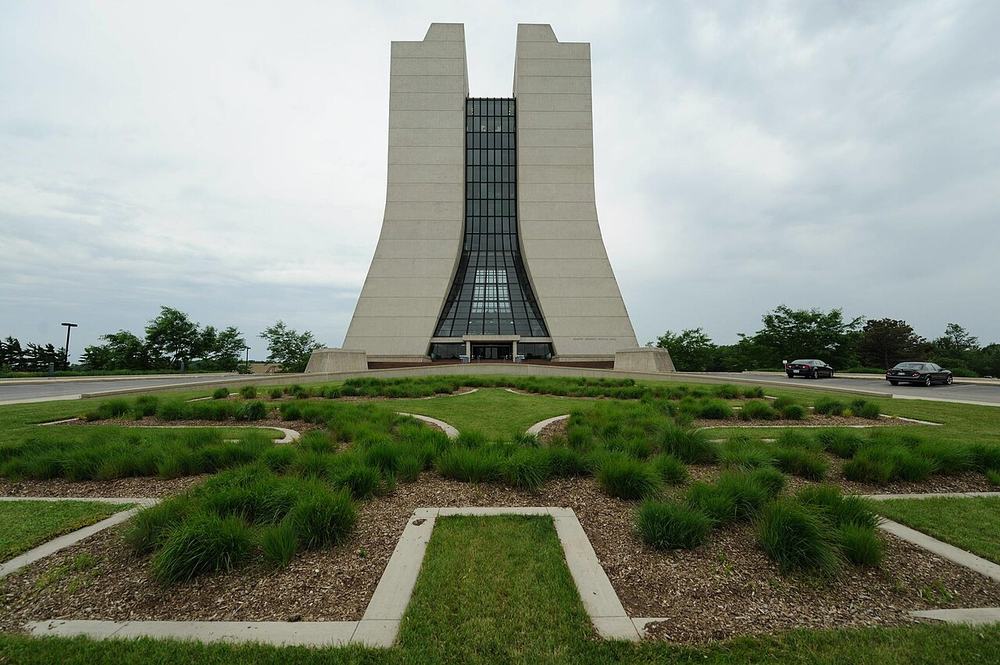
Fermilab: Wilson Hall and the bison

A 6,800-acre national particle physics lab in the western suburbs whose founding director designed its soaring sixteen-story headquarters, planted prairie inside the old accelerator ring and, in 1969, started a bison herd because science is a frontier. The herd is still there, twenty or thirty animals near the Pine Street gate, calves every spring, and the radiation signs on the fence are about the tunnels underground, not the bison. You can hike and bike the prairie roads, visit the atrium and art gallery in Wilson Hall on weekdays, and book a free guided tour that goes up to the 15th floor and into the control room.

Go: Free; adults need a REAL ID or passport at the gate and cars can be searched; outdoor visiting hours change with the season, so check fnal.gov first.
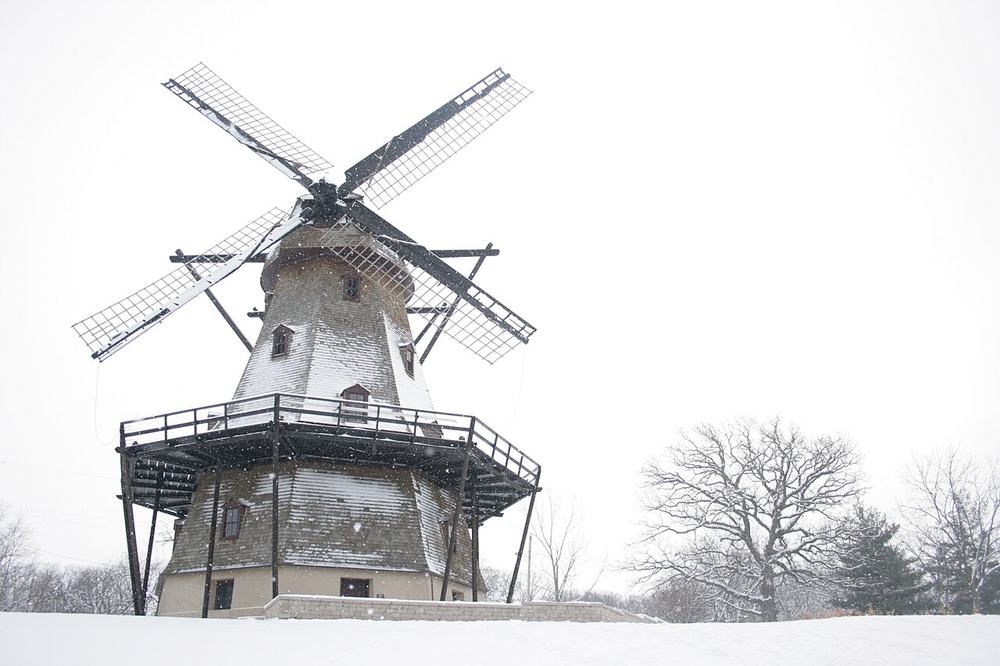
The Fabyan Windmill on the Fox River in winter
Photo: Jauerback, CC BY-SA 4.0
Villa 1907; garden 1910; windmill 1850s·Geneva, 1925 S. Batavia Ave.

Fabyan Villa, Japanese garden and windmill

Colonel George Fabyan's estate on the Fox River is three oddities in one forest preserve. Frank Lloyd Wright remodeled the farmhouse into a Prairie villa in 1907; a Japanese garden was laid out in 1910; and across the river stands a five-story Dutch windmill built in the 1850s without metal nails, which Fabyan bought and moved here in 1915 for about ten times what he paid for it. The estate's private laboratory did codebreaking in the First World War under William and Elizebeth Friedman, who went on to become America's foremost cryptanalysts. The Fox River Trail runs right through the grounds.

Go: Grounds free daily; villa and garden open on set days in the warm months for a small fee; windmill exterior any time, with grinding demonstrations some days.
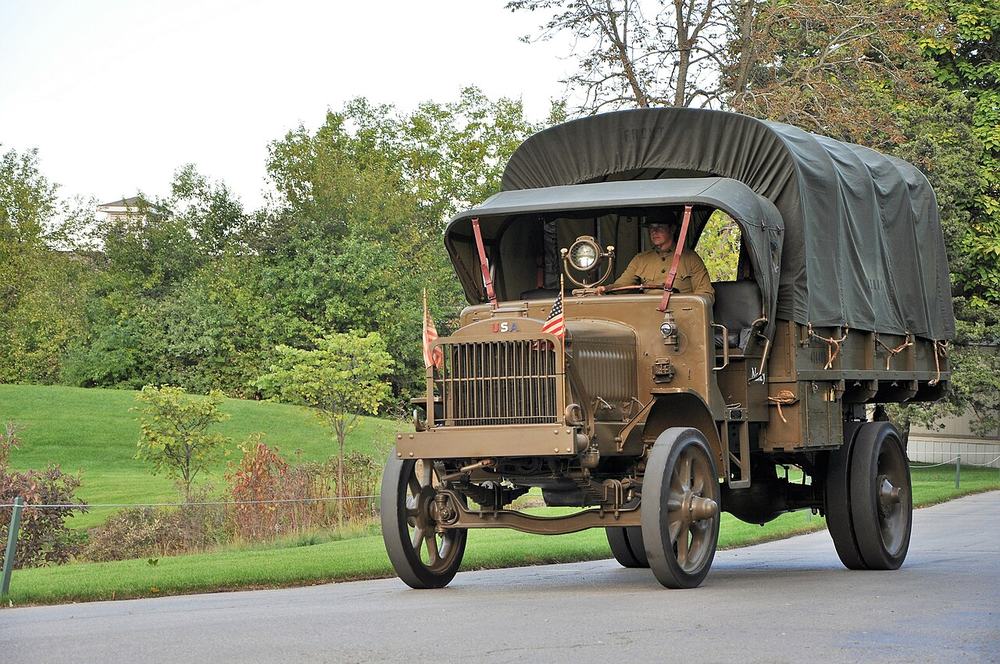
A restored First World War Liberty truck on the lawn at Cantigny Park
Photo: Idricha, CC BY-SA 4.0
Estate 1896; park 1958·Wheaton, 1S151 Winfield Rd.

Cantigny Park

Colonel Robert McCormick, the Tribune publisher, named his 500-acre estate for the French village where his Army division won America's first offensive victory of the First World War, and left it to the public in his will. Thirty acres of display gardens, the restored 1896 mansion with tours, and the First Division Museum, where real tanks and armored vehicles sit out on the lawn for kids to walk among. It gets a third of a million visitors a year and still feels like somebody's very large backyard.

Go: Admission is per car and higher on weekends; closed Tuesdays; the museum itself is free with parking paid.
Meadow Lake at the Morton Arboretum in winter
Photo: SimLibrarian, CC0
1922·Lisle, 4100 Illinois Route 53

The Morton Arboretum

Joy Morton, the salt man, founded it on his estate in 1922; his father invented Arbor Day, so trees ran in the family. Seventeen hundred acres, more than 220,000 cataloged plants, sixteen miles of trails, a driving loop, a children's garden and a hedge maze. Its prairie restoration, begun in 1962, is one of the earliest in the Midwest, and in 2023 the world conservation union made it the global center for saving tree species. The winter light show draws crowds; the quiet way in is a weekday walk in October.

Go: Open daily from morning to sunset; paid admission with parking included; timed tickets recommended.
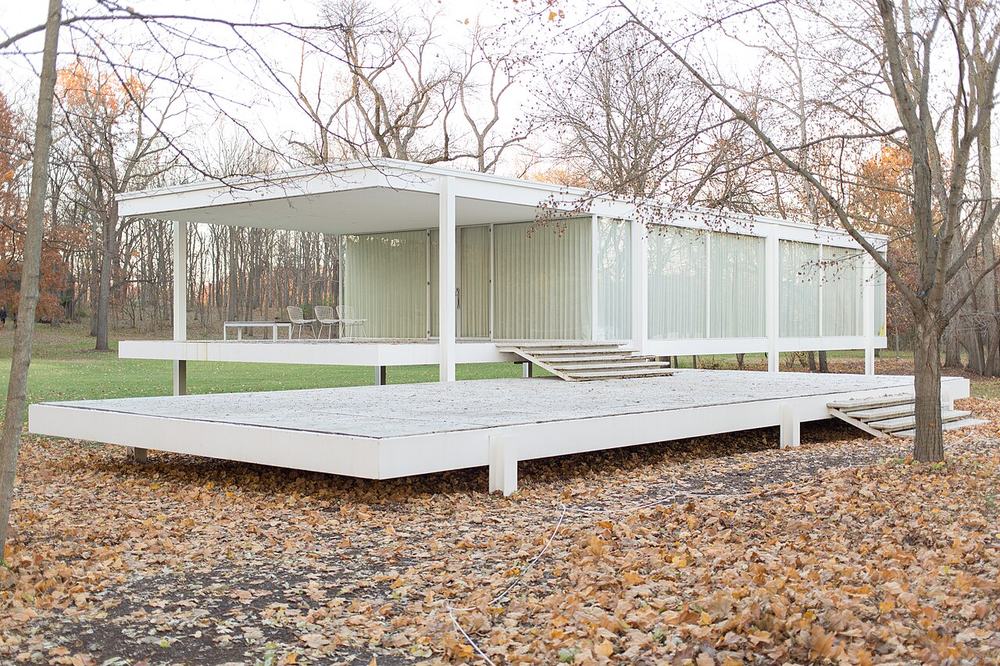
The glass Edith Farnsworth House by Mies van der Rohe on the Fox River
Photo: Victor Grigas, CC BY-SA 3.0
1951·Plano, 14520 River Rd., about 58 miles southwest

The Edith Farnsworth House

Mies van der Rohe's one-room glass house on the Fox River, lifted on eight steel columns above the floodplain, is the purest thing he ever built and one of the most important houses in the country. He designed it as a weekend retreat for Chicago doctor Edith Farnsworth, whose name was restored to it in 2021. The river has still gotten in more than once. Two preservation groups bought it at auction in 2003 and run it as a museum, with interior tours capped at twenty people and a grounds pass for walk-ins. Combine it with the McCormick House in Elmhurst for both Mies houses you can enter in one day.

Go: Open in season, roughly late March through November, closed Mondays and Tuesdays; interior by guided tour, book ahead; may close for flooding.

Photos come from Wikimedia Commons under Creative Commons licenses or from the public domain; each one is credited to its photographer with a link to the original file and license. Hours, free days and access rules change often, so treat every "Go" line as a starting point and confirm on the official site before you head out.
New to Chicago, or thinking about it?

Knowing the city is most of our job. Tell us what your life needs and we will translate it into a neighborhood, a building and a block.

Talk to The Boulevard Group