
All guides & resources →
Explore Chicago

Lake Michigan, from the beach to the bottom

The thing at the end of every east-west street is an inland sea: deeper than the Sears Tower is tall, wrecked with fifteen hundred ships, stocked with an ocean fish that saved it, and still delivering Chicago’s drinking water through cribs you can see from the shore. Here is the lake, top to bottom.

The lake by the numbers

MeasureThe number
Deepest point925 feet, deeper than the Willis Tower is tall. The average depth is 279 feet.
SizeAbout 22,300 square miles of surface, 307 miles long and 118 miles wide. Stand at Oak Street Beach and the far shore is beyond the curve of the Earth.
WaterJust under 1,180 cubic miles, the second-largest Great Lake by volume.
ShorelineMore than 1,600 miles, touching Illinois, Indiana, Michigan and Wisconsin.
One of a kindThe only Great Lake entirely inside the United States, and hydrologically one lake with Huron, joined at the Straits of Mackinac.

Source: Great Lakes Commission. Carved by the last ice age’s glaciers and filled as they melted; the geologic story is its own read. And the city beside it is named for a lake-edge plant: shikaakwa, the wild onion that grew along the wet prairie here.

Who lives where

The lake is not one habitat but a stack of them, and each has its own cast.

0 to 30 feet · beaches & shallows

The sandy edge

Warm, bright, and busiest in spring, when yellow perch move in toward shore to spawn and smallmouth bass prowl the first rocks. The bottom nearly everywhere now carries round gobies, an uninvited bottom-dweller the bass and perch have learned to eat.

Rock · reefs, breakwalls, riprap

The rocky neighborhoods

Every harbor wall and breakwater is an artificial reef. Smallmouth bass and rock bass hold in the gaps, gobies carpet the crevices, and in Green Bay and the lake’s quieter bays this rocky, weedy world also holds walleye and pike.

The open water column

The blue highway

Out over deep water, chinook and coho salmon, rainbow trout and brown trout chase schools of baitfish along temperature edges. Each spring the coho sweep up the warm southern shore first, which is why April headlines in Chicago read like fishing reports.

100 to 900 feet · the cold dark

The deep

The native heavyweights live down here: lake trout over deep reefs, lake whitefish near the bottom, and bloaters, a native deepwater cisco, far below the light. The floor itself is now paved with quagga mussels, billions of tiny filters that changed the whole lake above them.

Harbors & river mouths

The front porches

Chicago’s harbors are the lake’s meeting rooms: salmon stage off the river mouths in fall, perch hole up in the slips in cold months, and the Park District keeps a public list of harbor and lagoon spots where a city fishing rod is entirely at home.

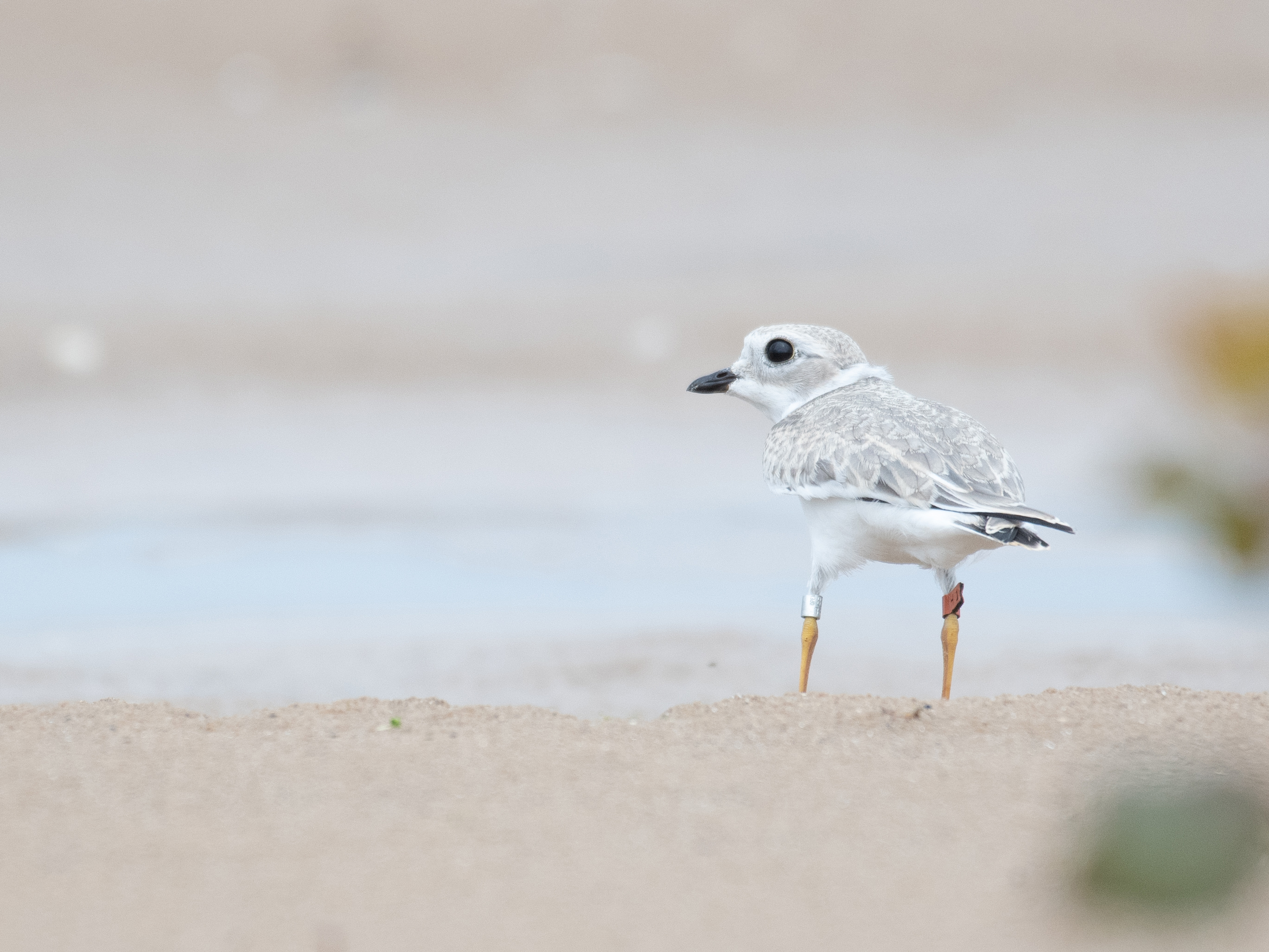
Searocket the piping plover chick on the beach
The air above it

The flyway

The shoreline is a highway for migrating birds funneling along the water each spring and fall, and the beach itself made national news when piping plovers, a federally endangered shorebird, returned to nest at Montrose. Imani and Searocket were back on the sand again in 2026.

Source: Block Club Chicago · Photo: Tamima Itani/USFWS, public domain

The fish worth knowing

Six names that explain most of what happens under the surface.

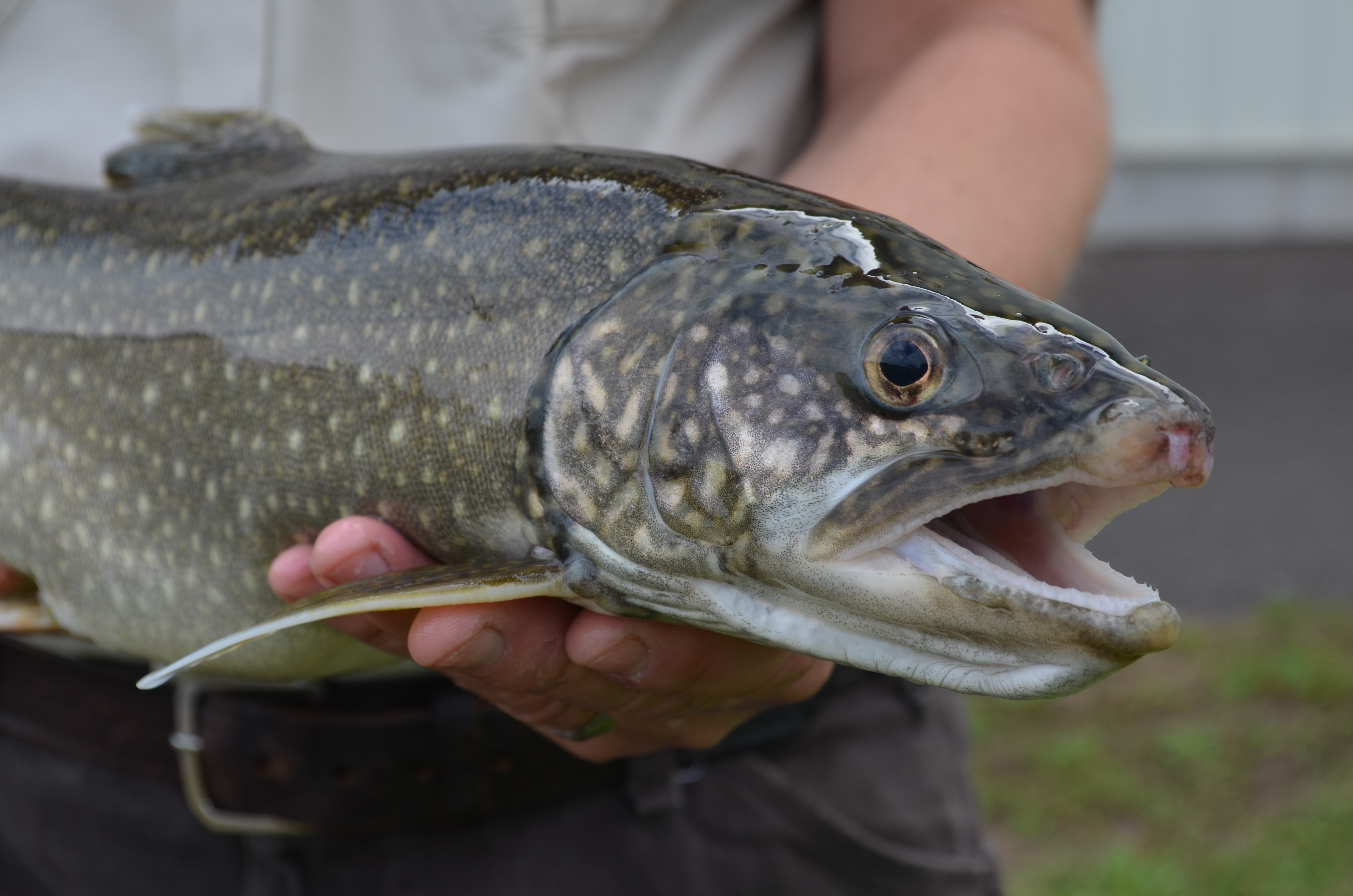
A biologist holds an adult lake trout at the Iron River National Fish Hatchery
Native · the old king

Lake trout

The lake’s original top predator, wiped to near-nothing mid-century by sea lamprey and overfishing. After decades of stocking, wild-born lake trout are finally showing signs of sustaining themselves again, one of the quiet wins of the whole restoration era.

Source: GLFC State of the Lake · Photo: USFWS, public domain
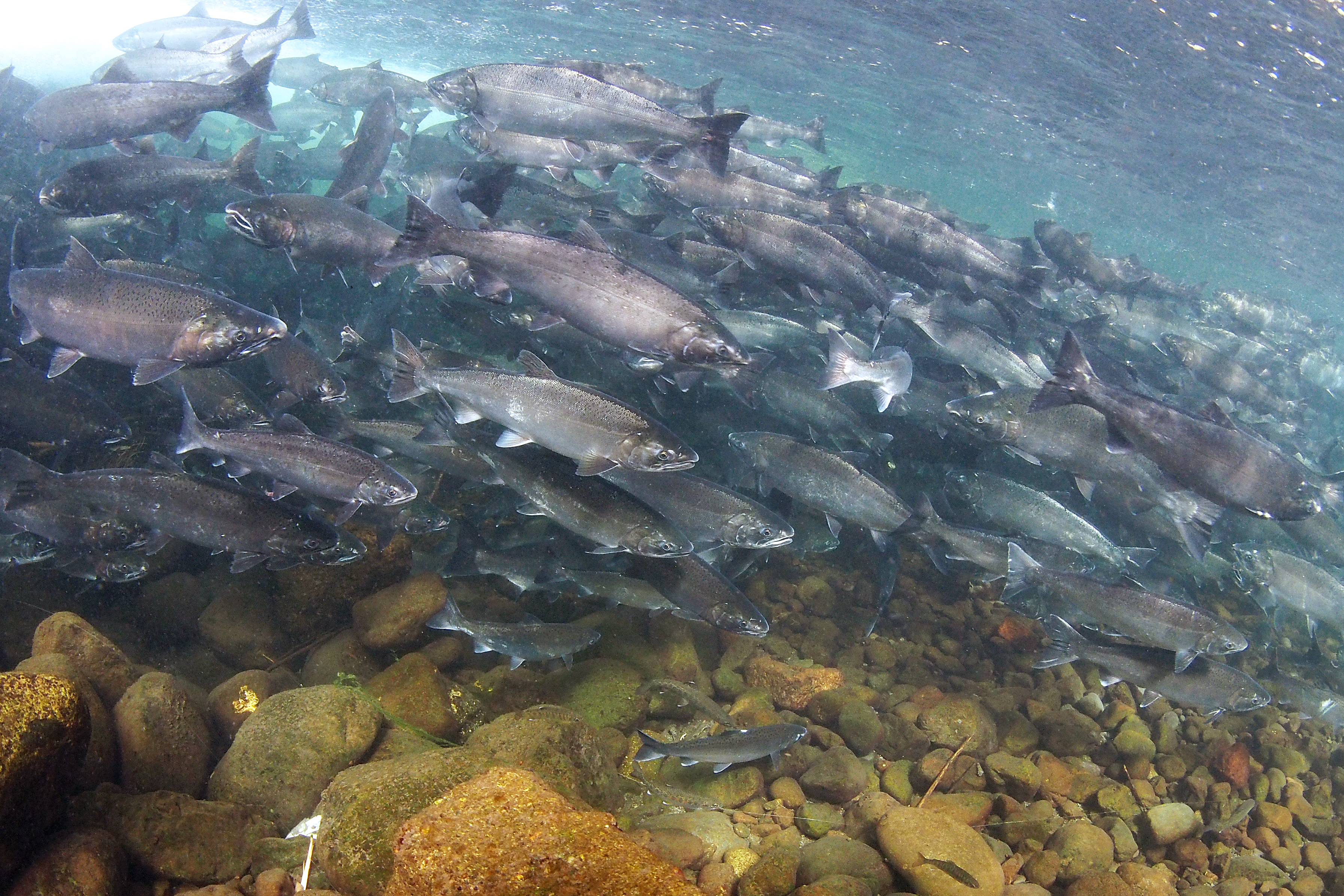
A school of coho salmon swimming upriver
Introduced · 1966 & after

Coho and chinook salmon

Pacific salmon, planted on purpose and now the engine of a sportfishing economy. They live fast, grow huge on baitfish, and run toward tributaries and harbor mouths each fall to spawn.

Source: Great Lakes Fisheries Heritage Trail · Photo: Roger Tabor/USFWS, public domain
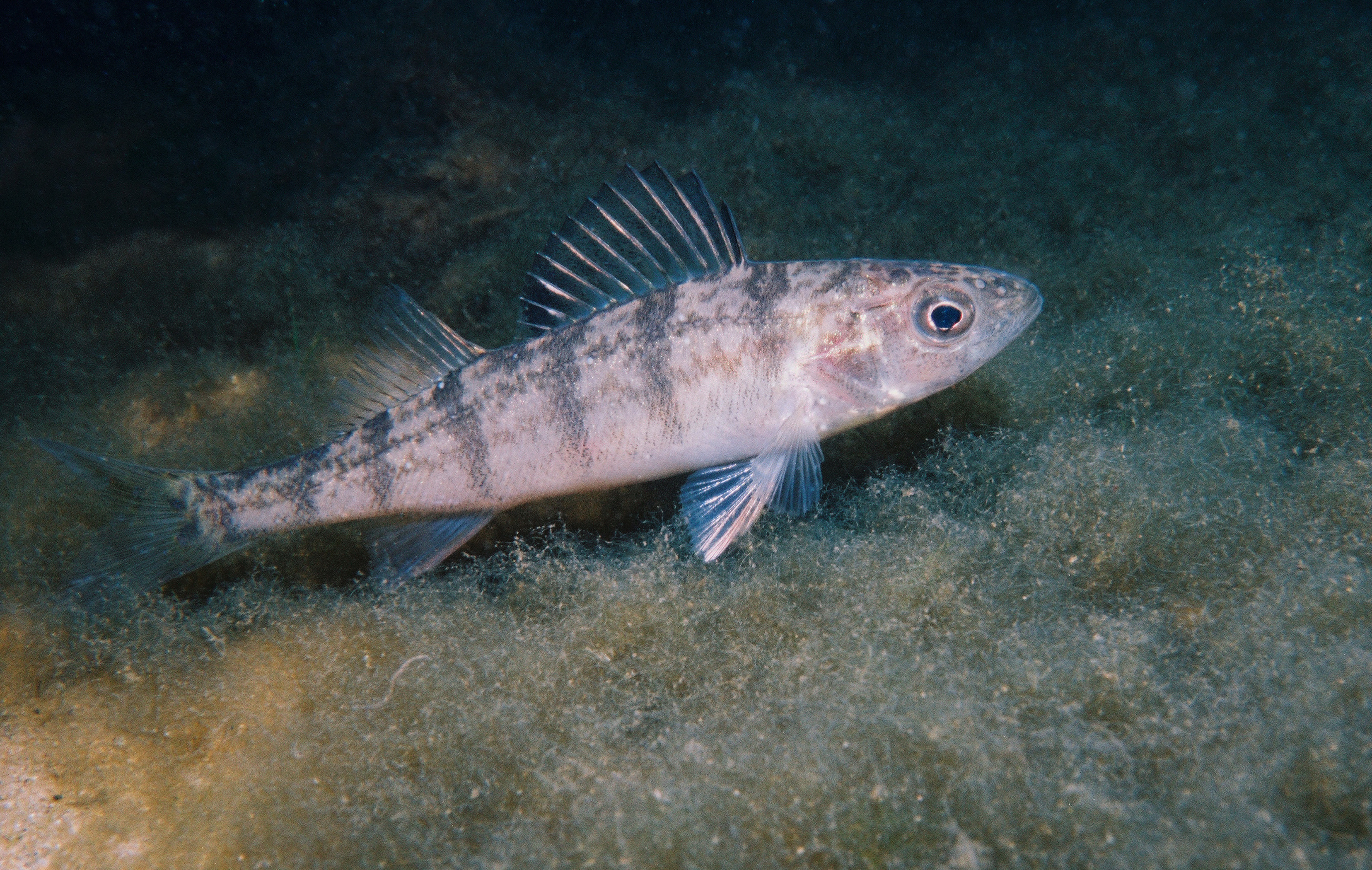
A young yellow perch along a lake shoreline at night
Native · the fry fish

Yellow perch

The fish of every old Friday fry and every kid’s first lakefront rod. Perch boomed in the 1980s, crashed in the mid-1990s, and remain far below those highs, which is why the ones in the harbors are guarded so carefully now.

Source: GLFC State of the Lake · Photo: Roger Tabor/USFWS, public domain
Native · the deep grazer

Lake whitefish

The staple of the old commercial fishery and the best fish dinner the lake ever produced. Whitefish are struggling well below management goals today, another ripple of the mussel-changed food web.

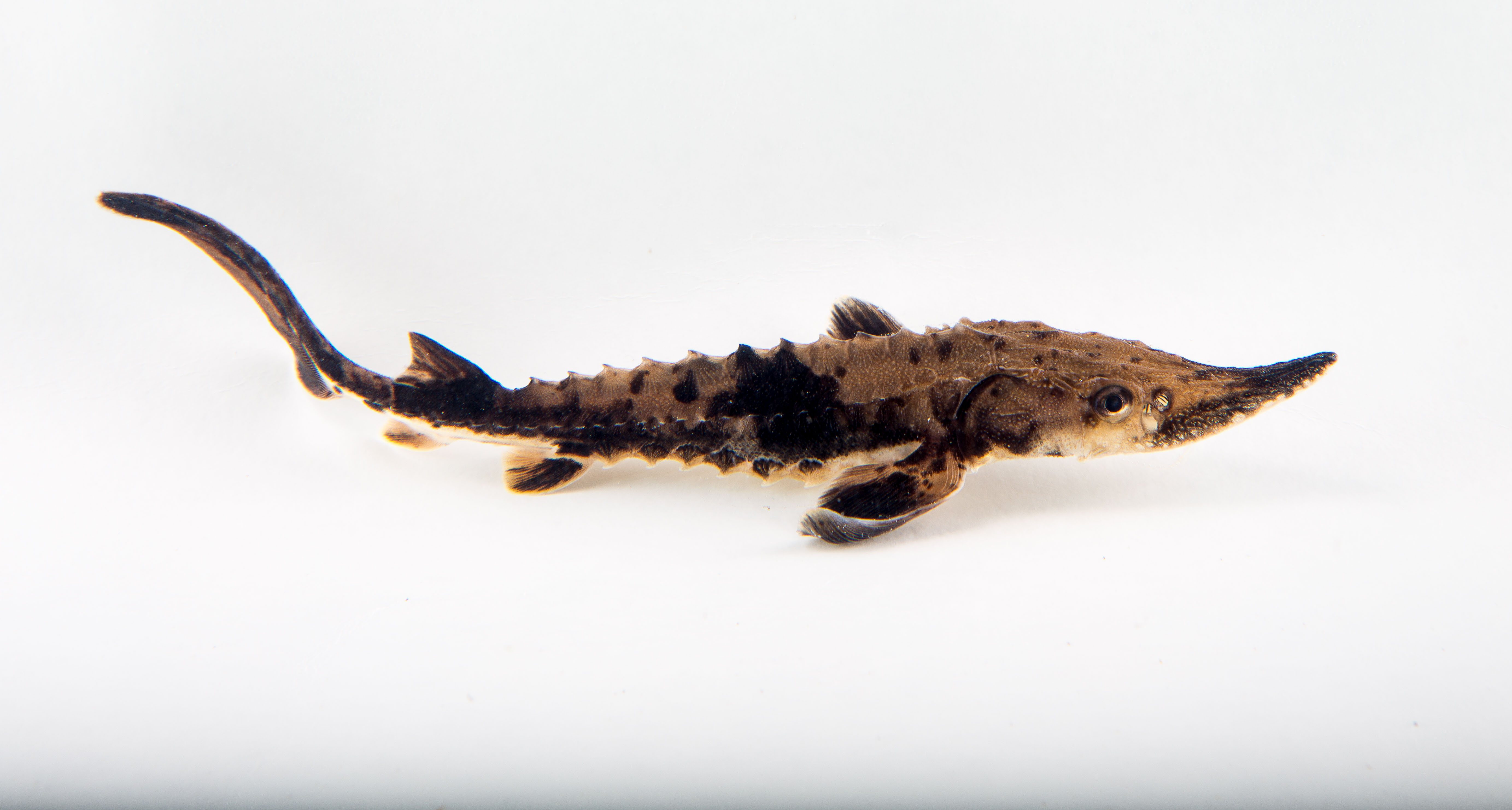
A young lake sturgeon with its rows of bony plates
Native · the survivor

Lake sturgeon

Armor-plated, older as a species than the dinosaurs’ end, and capable of outliving every angler who ever sees one. Nearly wiped out in the 1800s, sturgeon hang on in small numbers with long rehabilitation programs behind them.

Source: GLFC State of the Lake · Photo: Ryan Hagerty/USFWS, public domain
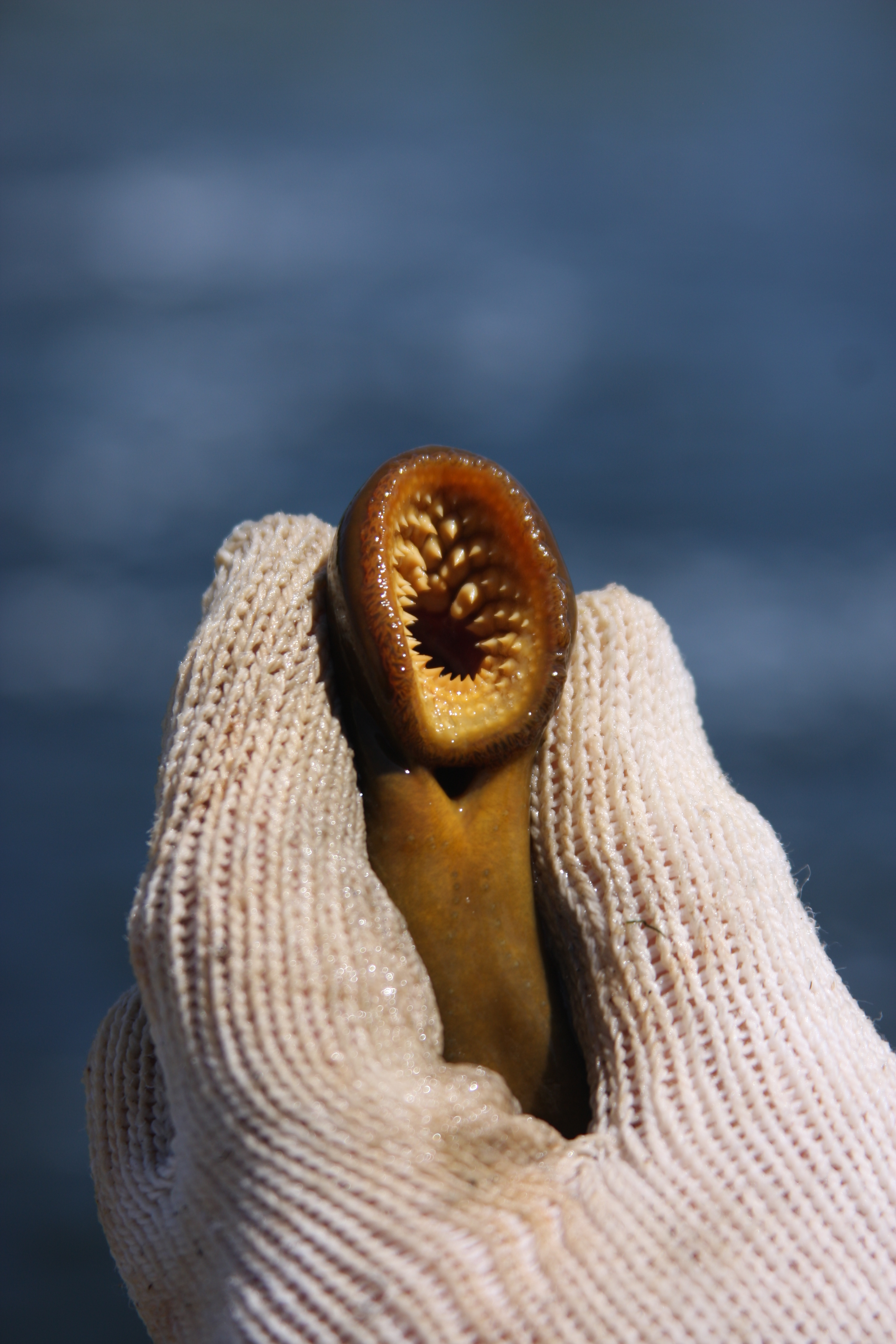
The open, tooth-ringed mouth of a sea lamprey
Uninvited · the cast of invaders

The invaders

Sea lamprey, the eel-shaped parasite that felled the trout, is now held down by an ongoing control program. Alewife, the silver invader that once died on beaches by the million, is managed as salmon food. Round gobies took the bottom, and quagga mussels filtered the water astonishingly clear, which looks lovely and quietly starves the base of the food web.

Source: GLFC · WorldAtlas · Photo: Karla Bartelt/USFWS, public domain

The story of the fishery, in three acts

Act one · the collapse

Dead fish for miles

Sea lamprey slipped in through shipping canals and gutted the lake trout. With the top predator gone, invasive alewives exploded, and by the mid-1960s their seasonal die-offs left swaths of dead fish stretching for miles along the beaches, closing them in summer.

Act two · April 2, 1966

The salmon gamble

Michigan’s fish chief Howard Tanner, told to do something spectacular, released Oregon coho salmon into a Lake Michigan tributary. Within a year, coho madness: the salmon grew fat on alewives, anglers swarmed the coast, chinook followed, the die-offs ended, and a multi-billion-dollar sport fishery replaced a broken lake.

Act three · the clear-water era

Clearer is not richer

Zebra and then quagga mussels arrived in ballast water and filtered the lake glass-clear. The postcard blue you see today is partly their work, and so is the thinner food web beneath it: the plankton the mussels strip out is the same fuel young perch and whitefish needed. The lake is beautiful, altered, and still adjusting.

Source: WorldAtlas

Wrecks, storms, and stories

An inland sea earns its history the hard way. Roughly 1,500 of the Great Lakes’ 6,000 wrecks lie in this one lake.

November 22, 1912

The Christmas Tree Ship

The schooner Rouse Simmons left the Upper Peninsula loaded with thousands of Christmas trees for Chicago, where Captain Herman Schuenemann sold them off the deck at the river. She sailed into a November gale and vanished with all hands; trees washed ashore for years. Divers found her in 1971, in 172 feet of water off Two Rivers, Wisconsin.

Source: Mental Floss
September 1860

The Lady Elgin

A steamship rammed by a schooner in a night gale off the North Shore. More than 300 people were lost, still the deadliest open-water disaster in Great Lakes history, and the wreck that pushed a new law requiring running lights on every lakes vessel. The wreck itself was not found until 1989.

Source: Mental Floss
Still working · two miles out

The water cribs

Those little castle-looking structures on the horizon are intake cribs, gathering Chicago’s drinking water from far offshore, a system the city started building in the 1860s to escape its own polluted shoreline. The lake is not just the view; it is what comes out of every tap in the city.

Source: Wikipedia
The storm ledger

November is the dangerous month

The 1880 “Big Blow” sank more than 90 vessels on this lake in one storm. The 1940 Armistice Day blizzard took three freighters. Fall gales stack short, steep waves that old sailors respected more than ocean swells, and the shipping calendar still bends around them.

Source: Mental Floss

The lake in Chicago

Where the city meets the water

You can fish the lake without leaving the city: spring coho run close along the south lakefront, perch school around the harbors, and the Park District publishes the list of harbors and lagoons open to a rod. Montrose is the wild corner, where the beach’s protected dunes hosted the piping plovers’ return and the point pulls in migrating birds by the thousand. And when you swim at any city beach, you are swimming in the drinking glass: the same water, a mile or two out, is what the cribs send to the taps.

Want the lake at the end of your street?

Every east side neighborhood has its own version of lakefront living, from high-rise harbor views to a walk-to-the-beach block. Chris knows which buildings actually see the water and which blocks make the morning run to the Lakefront Trail easy.

Ask Chris about lakefront living